There is no single best stage screen cloth. Muslin wins on price and paintability, velour wins on light and sound control, and specialty fabrics win when a shot or a scene demands something the other two cannot do. The right answer depends on whether the cloth has to block light, absorb sound, take paint, or survive a touring schedule.
That choice matters more than most audiences realize. A backdrop is not decoration; it is the light and acoustic environment the performers work in. Pick the wrong fabric and the budget bleeds into re-rentals, reshoots, or a flat-looking frame on camera. This piece breaks down the three families of cloth, what each does well, and where each fails.
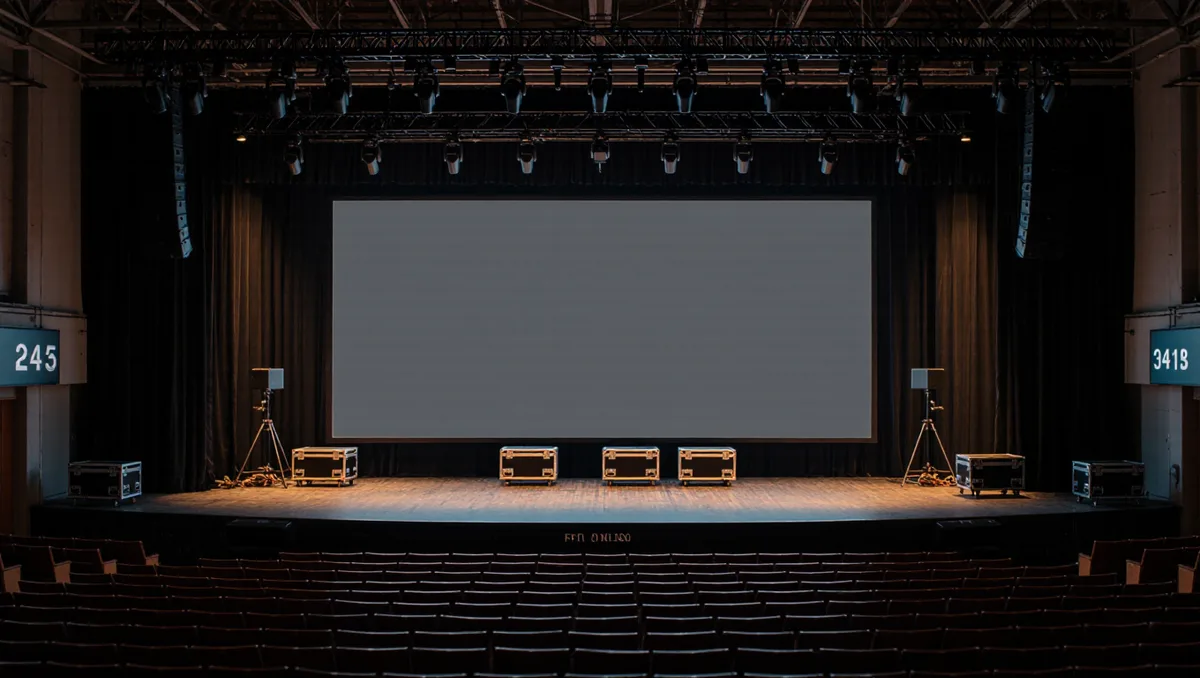
It helps to start with what the cloth is actually covering. Merriam-Webster defines a stage as "a raised platform" and, more fully, "the part of a theater on which the acting takes place and which often includes the wings" (Merriam-Webster). Cloth lives in those wings and across that platform — masking the offstage space, shaping the light, and quietly managing what the audience hears. The same logic carries to screen work, where fabric stands in for a location a production cannot afford to build.
What Does Muslin Actually Do Well?
Muslin is the workhorse. It is a plain-woven cotton cloth, inexpensive by the bolt, and it takes paint better than almost anything else in the shop. Scenic artists prime it, size it, and paint entire worlds onto it — a brick wall, a sky, a forest line. When a backdrop needs to look like something specific, muslin is usually the substrate.
Its weaknesses are the mirror of its strengths. Unpainted, it is translucent enough that stage light leaks through it, which ruins it as a masking fabric. It also creases and sags with humidity, so a painted drop that looks taut in a dry shop can wave like a flag in a damp theater. And it offers essentially no sound absorption. Muslin is for image, not for control.
On film sets, muslin has a second life as diffusion and bounce. Stretched on a frame and lit from behind, it softens a hard source into something flattering on a face. That is a lighting-department use, but it comes from the same property that makes it a poor blackout cloth: light passes through it, and the crew decides whether that is a bug or a feature.
Why Is Velour the Default for Heavy Drapes?
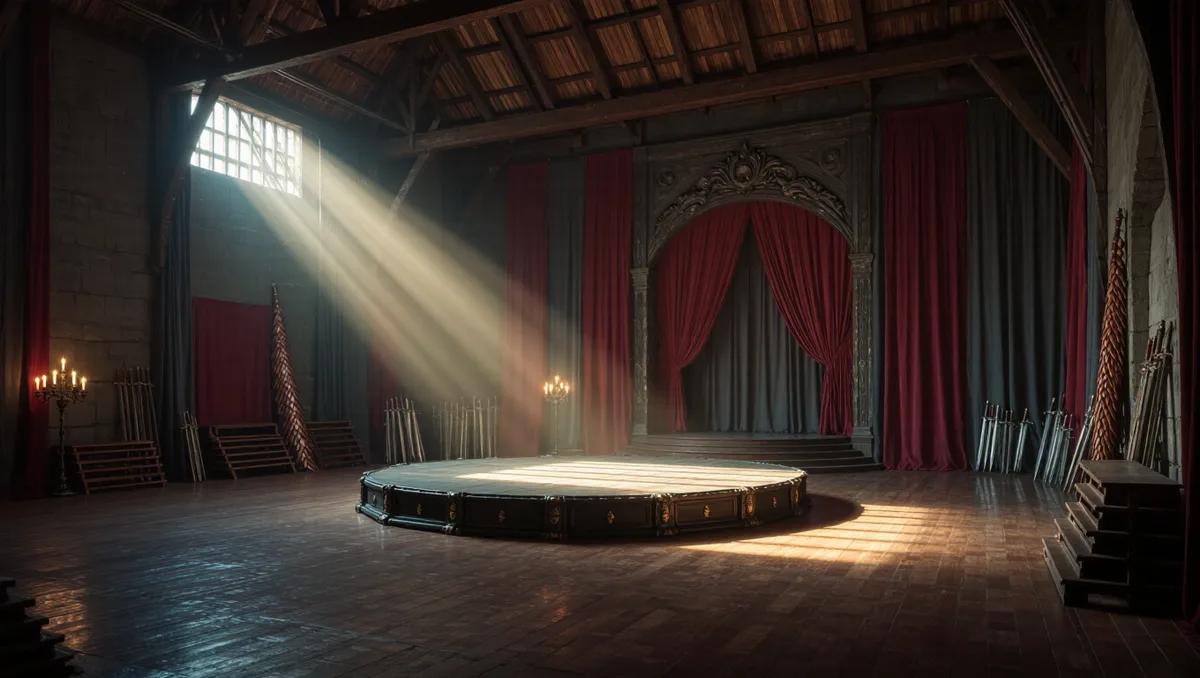
Velour is a cut-pile fabric with a short, dense nap — think of the plush side of velvet, woven to survive handling. That nap is the whole trick. It eats light. A velour drape does not reflect a hot spot back at the audience; it swallows the beam, which is why it is the standard choice for legs, borders, and the grand drape that opens a show.
It also absorbs sound. The deep pile traps air and deadens reflections, so a velour-filled wing sounds different from a bare wall. In a black-box theater or a studio shoot, that acoustic damping is often the quiet reason the fabric was specified at all. Velvet-like synthetics imitate the look at lower cost, but the classic cotton velour remains the reference point for how a heavy drape should hang and behave.
The trade-offs: weight and cost. Velour is heavy to hang, heavy to tour, and priced accordingly. It also demands care — pile crushes, seams carry real load, and fire treatment has to be maintained. A venue buying velour is buying a fixture, not a consumable.
When Do Specialty Fabrics Earn Their Price?
Specialty cloth exists for the jobs muslin and velour cannot do. The family includes blackout-lined materials that stop light completely, scrims that read solid when lit from the front and transparent when lit from behind, and reflective or metallic fabrics built for glossy highlights on camera. Each is a tool with one strong trick.
The scrim is the classic example. A ghostly figure appearing behind a supposedly empty frame, a slow reveal of a set behind a wall — those effects depend on the scrim's two-way lighting behavior, not on post-production. Similarly, a true blackout drape matters whenever a scene change happens in view of the audience or a camera: the wrong cloth glows, and the illusion dies.
Specialty fabrics fail when treated as general-purpose. A scrim with a hole is a visible flaw, not a repairable one. Reflective materials show every wrinkle. The rule of thumb is simple: buy specialty cloth for its specific trick, and buy muslin or velour for everything else.
How Should a Production Choose Between Them?
Our analysis comes down to four questions, asked in order. Answering them honestly usually settles the choice before anyone opens a catalog.
- Does the cloth need to block light? Yes points to velour or a blackout-lined specialty; no opens the door to muslin.
- Does it need to take paint? Paintable means muslin or a dedicated scenic canvas; painted velour is a rare and expensive compromise.
- Does sound matter in that spot? Near performers or microphones, the pile of velour earns its keep; flat-woven cloth does little.
- How long does it have to live? One shoot favors cheap and specific; a touring year favors durable and repairable.
Cost follows those answers rather than leading them. A production weighing the full bill — fabric, hardware, labor, freight — will find the cloth decision sits inside a larger budget picture, which we covered in What a Stage and Screen Setup Really Costs: The Price Drivers Explained. The same discipline applies here: the fabric line item is small, but the wrong choice multiplies costs downstream. Readers following this should also see What a Stage and Screen Setup Really Costs: The Price Drivers Explained.
There is also a durability hierarchy worth stating plainly. Cotton muslin is the most replaceable; damage means a new drop, and drops are repainted or retired as a matter of routine. Velour is the most permanent; venues keep drapes for decades with re-fireproofing and seam repairs. Specialty fabrics sit in between — durable within their niche, but unforgiving of misuse outside it.
What This Means for Working Performers and Crew
For performers, the fabric in the room is part of the instrument. A velour-heavy stage gives a singer a drier acoustic to pitch against; a muslin-filled film set gives a lighting designer a softer key to work with. Knowing which cloth surrounds you is knowing something about how you will be seen and heard.
For crew and small companies, the practical takeaway is to match the fabric to the dominant problem, not to chase a material that does everything badly. Paint the muslin. Hang the velour where light and sound leak. Spend on specialty cloth only where its one trick is the shot. And for readers who want the wider craft context — how those painted drops are actually built — our companion piece Stage & Screen Studios: How Production Backdrops Get Made walks through the shop process step by step.
The evidence here is craft knowledge, not lab data: the dictionary sources confirm what a stage is and what its wings are for (Cambridge Dictionary catalogs the theatrical senses of the word), while the fabric behaviors above are the settled conventions of scenic and lighting practice. What remains unknown is any precise price or lifespan figure for a given cloth — those vary by weight, weave and vendor, and no honest writer should print a number without a dated quote in hand.
The Takeaway on Stage Screen Cloth
Muslin paints, velour controls, specialty fabric performs one trick. Choose by the problem in front of you: image, light, sound, or lifespan. A production that asks the four questions in order will spend less and look better — and the audience, walking out, will never know a fabric decision made the difference.