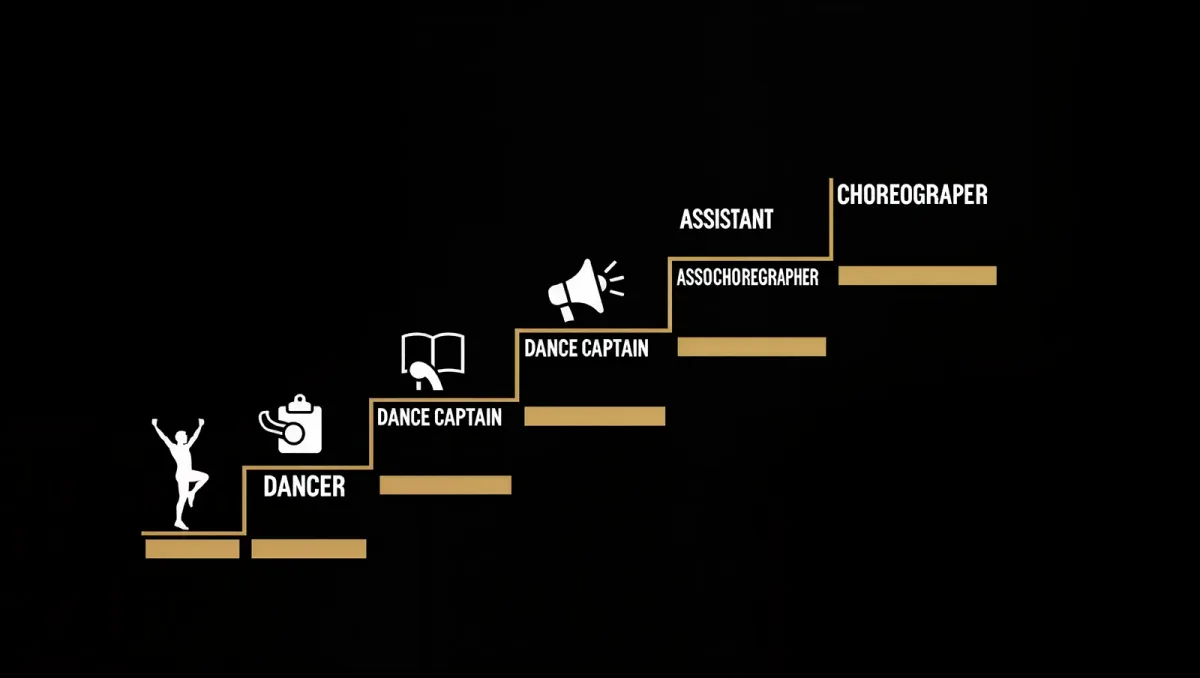
From Assistant to Choreographer: The Actual Ladder
Dance captain, assistant, associate, lead: how movement careers advance step by step, what each rung pays and does, and how the industry verifies the climb.

Explore dance coverage from Crack Mag: Dancers and choreographers: club floors, battle culture, companies, music-video movement.
Dancers and choreographers: club floors, battle culture, companies, music-video movement

Dance captain, assistant, associate, lead: how movement careers advance step by step, what each rung pays and does, and how the industry verifies the climb.

One-on-ones, crew clashes, seven-to-smoke and the call-out: a working guide to battle formats and how street-dance judging actually reaches a decision.

Degree programs and the jam circuit produce working dancers in parallel — what each track teaches, what each costs, and where the two systems now overlap.

Between the choreographer's vision and the dancers' bodies sits a specialist role: what rehearsal directors actually do between premieres, on tour and inside a company's memory.

Auditions, rehearsal weeks, copyright and credits: how movement direction became a named, credited, increasingly organized profession in the music-video industry.

Born in 1970s Los Angeles clubs and carried to the world by Soul Train, waacking has its own history, vocabulary and boundaries — and its practitioners keep them precise.

The club floor is not a venue feature but a cultural technology with rules, origins and lineage — how Black, Latino and queer rooms invented the grammar every dance floor still speaks.

A professional dancer can wear out a pair in a single performance: inside the handmade economy of pointe shoes, from Hackney's paste-and-burlap benches to the supply math of ballet companies.

Ankle sprains, stress fractures and overuse dominate the data: what decades of dance-medicine research says about injury rates, risk factors and prevention protocols that work.

Paris 2024 put breaking on the world stage and gave it judges, brackets and a pathway — the competitive circuit's structures, its judging criteria and what the Olympic experiment left behind.