Type "music store near me" into a phone and you get a map full of pins. What the map won't tell you is which of those shops will actually take care of you. The answer comes down to three things: whether the staff know their trade, how honestly they handle used gear, and whether they can set an instrument up to play properly before it leaves the building.
It helps to be clear about what "best" even means here. Dictionaries define the word as most satisfactory, suitable or useful — not most famous or most expensive. The Free Dictionary frames it as what is "most satisfactory, suitable, or useful; most desirable," and that is the right lens for a shop search. The best store for you is the one that fits what you play, what you can spend and how much help you need.
What should you look for in the staff?
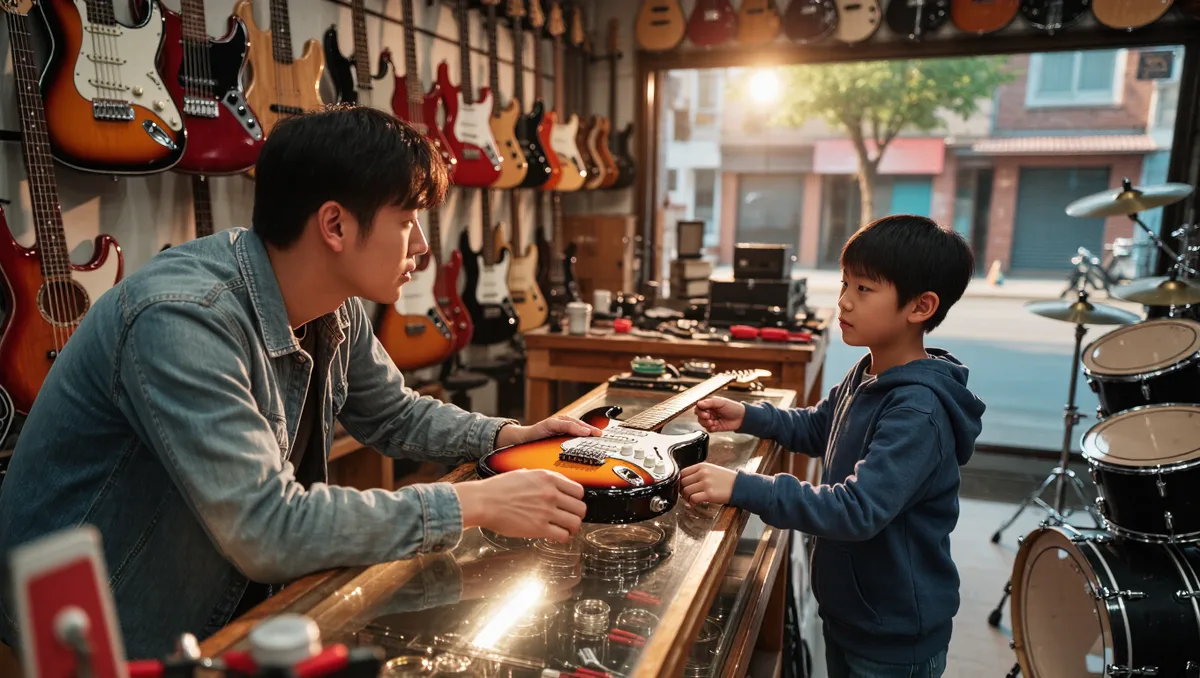
The people behind the counter are the product. A good store hires players, not just salespeople, and you can hear the difference in the first five minutes. Ask a specific question — how a particular guitar's neck feels compared with another, why one keyboard suits gigging and another suits a bedroom — and see whether you get a real answer or a brochure recital.
Watch for a few honest signals. Staff who ask what you play before they show you anything. Staff who talk you out of gear you don't need yet. Staff who admit when a question is outside their lane and point you to a colleague. A shop full of working musicians will feel like a rehearsal room that happens to sell things. A shop full of upsell scripts will feel like a phone plan.
Practical steps: visit twice before you buy anything big. Go once on a quiet weekday when someone has time to talk, and once on a busy Saturday to see how they treat people who clearly aren't buying today. How a store handles a browser with no wallet says more than how it handles a buyer.
How should a shop handle used gear?
Used inventory is where a store's character shows. Some shops price trade-ins fairly and stand behind what they sell. Others treat the secondhand case as a place to dump problems. If you want a deeper dive into how the big chains put numbers on secondhand instruments, our guide to Used Gear Gold: How Trade-In Chains Price Secondhand Instruments walks through the pricing logic. This connects to our earlier piece, Used Gear Gold: How Trade-In Chains Price Secondhand Instruments.
In any shop, ask three questions about a used piece: where it came from, what was repaired, and what happens if it fails in a month. A confident store answers all three without flinching. A vague answer — "the guy said it was fine" — is your cue to walk. Check the obvious wear points yourself: fret wear on a guitar, sticky pads on a woodwind, crackle on a turntable at high volume. Nobody expects mint. Everybody should expect honesty about condition.
What this means for your wallet: a store with a real used section and a real return policy often beats a discount warehouse. You pay a little more for someone who has already filtered out the lemons.
Why does setup service matter so much?
An instrument is a machine, and machines need adjusting. A guitar that has sat in a truck or a shipping container can arrive with high action, buzzing frets or a bowed neck. A shop with an in-house tech fixes that before you ever play a note. A shop without one hands you the box and hopes for the best.
Before you buy, ask: is there a technician on site, what does a standard setup include, and how long does it take? The answers tell you whether the store sees itself as a seller of instruments or a caretaker of them. The caretaker is the one worth your money. This matters double for beginners, who cannot yet tell a setup problem from a playing problem — and who often quit because the instrument fought back.
Our analysis: setup service is the single best predictor of a shop's overall quality. Stores that invest in a bench and a tech tend to invest in staff training and fair trade-ins too. The habits travel together.
What about price — should you just buy online?
Online listings will usually win on sticker price. That is not the whole transaction. A local store gives you the chance to play the exact instrument you're buying, get it adjusted, and walk back in when something goes wrong. Those services have value even if they never appear on a receipt.
A reasonable approach: research models online, then buy locally where the price gap is small and the service is real. Where the gap is huge — and sometimes it is — at least buy from a shop that offers setup and a return window. Paying for a store you never use is just a delivery fee with extra steps.
How do you test a store before committing?
Run a simple checklist on your first visit:
- Does someone acknowledge you and ask what you play?
- Can staff answer a technical question, or find someone who can?
- Is there a working used section with clear condition notes?
- Is there a tech on site, and can they explain what a setup includes?
- Do they state a return or exchange policy without being pressed?
- Do they treat browsers with the same respect as buyers?
Four or more yeses and you've found your shop. Fewer than two, keep driving. The checklist takes twenty minutes and saves years of frustration.
The takeaway: buy where you can come back
The best music store near you is not the one with the flashiest window display. It's the one whose staff know the gear, whose used section tells the truth and whose bench keeps your instrument playing the way it should. Those three things — expertise, honesty, service — are what the search should actually be for. Everything else is decoration.
And once the gear is sorted, the fun part starts. For more on the craft, the scenes and the business of making music, spend some time in our music section — and if you're just starting out, How to Read Music Notes: A Beginner's Field Guide is a good next stop.