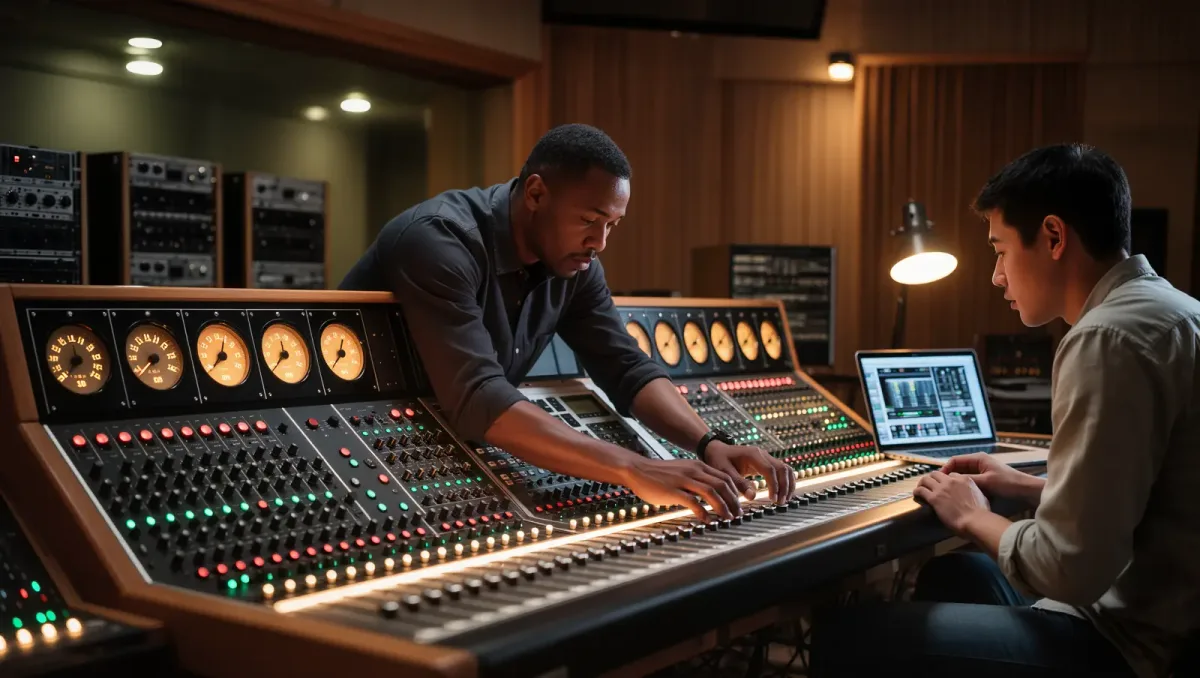
A mix engineer works on the song. A mastering engineer works on the record. That is the shortest honest answer to the confusion, and it holds up: mixing balances the individual parts of a track, while mastering prepares the finished mix to become the single file every copy of the song is made from.
The two roles sit at opposite ends of the same pipeline. Mixing happens first, inside the session, with all the tracks still open. Mastering happens last, on one stereo file, after the mix is signed off. If you have ever wondered why an album sounds like one album rather than twelve separate recordings, the second engineer is usually why.
Both jobs involve ears, gear and judgement. But the questions each one asks are different, and the tools follow from the questions.
What does a mix engineer actually do?
Mixing is the balancing act. A recorded song arrives as dozens of separate tracks: vocals, drums, bass, guitars, synths, maybe an orchestra's worth of extras. The mix engineer decides how loud each one sits, where it lives in the stereo field, and how it relates to everything around it.
The work is part technical, part creative. Equalization carves space so instruments don't fight for the same frequencies. Compression controls a vocal that jumps from a whisper to a shout. Reverb and delay place a voice in a room, real or imagined. Automation rides levels through the song so a chorus lifts and a verse pulls back.
The mix engineer also makes calls a listener never notices but always feels. Does the snare hit before or with the beat? Should the backing vocals sit behind the lead or beside it? These decisions shape the song's character. For a closer look at that craft, see What a Mix Engineer Actually Does to Your Song.
At the end, the engineer delivers a stereo mixdown: two channels of audio, everything baked in. That file is what mastering receives.
What does a mastering engineer actually do?
Mastering is audio post-production. As Wikipedia's overview of audio mastering describes it, the process prepares and transfers recorded audio from the final mix to a master recording, the source from which all copies are produced, whether through pressing, duplication or replication. In other words, the master is the mother of every stream, download and record that follows.
Because the master feeds every format, the mastering engineer listens for how the track will translate across playback systems: phone speaker, car stereo, club system, vinyl cut. Mastering engineers commonly apply equalization and dynamic range compression to optimize that translation, along with final level adjustments so a track sits at a competitive volume without falling apart.
Mastering also handles the album as a whole. The engineer sets consistent levels from track to track, spaces the gaps between songs, sequences the running order, and embeds the technical metadata that distributors and pressing plants need. One song mastered alone can sound great and still stick out badly on a record; the mastering engineer is the person who catches that.
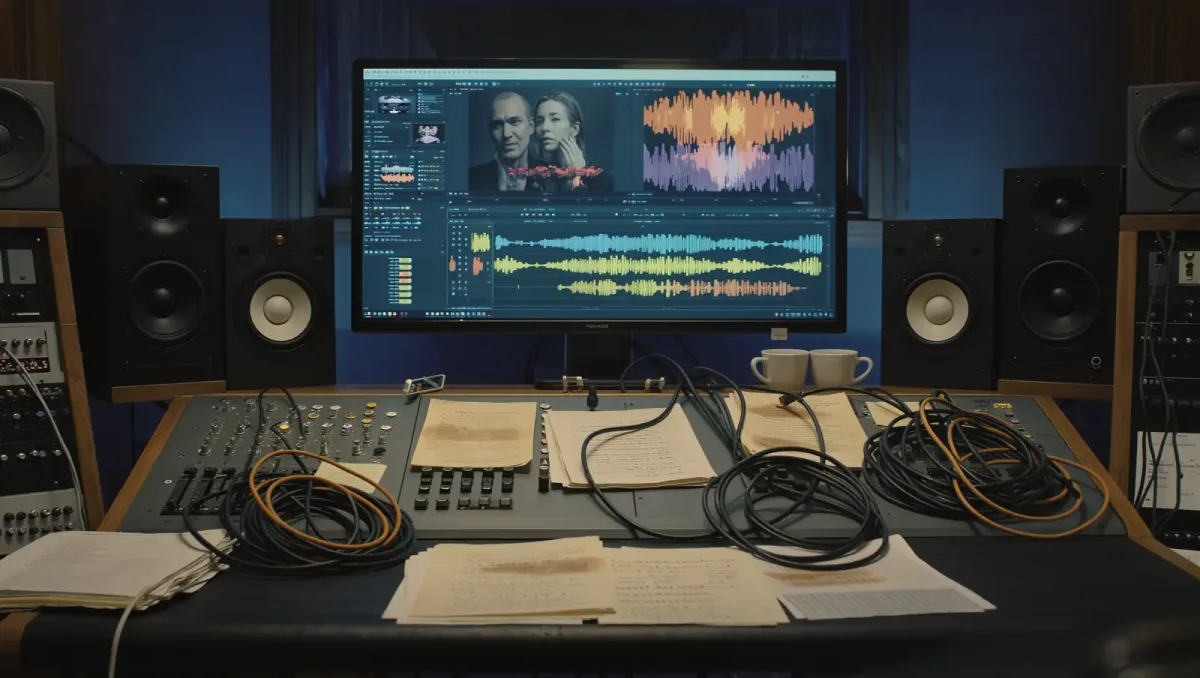
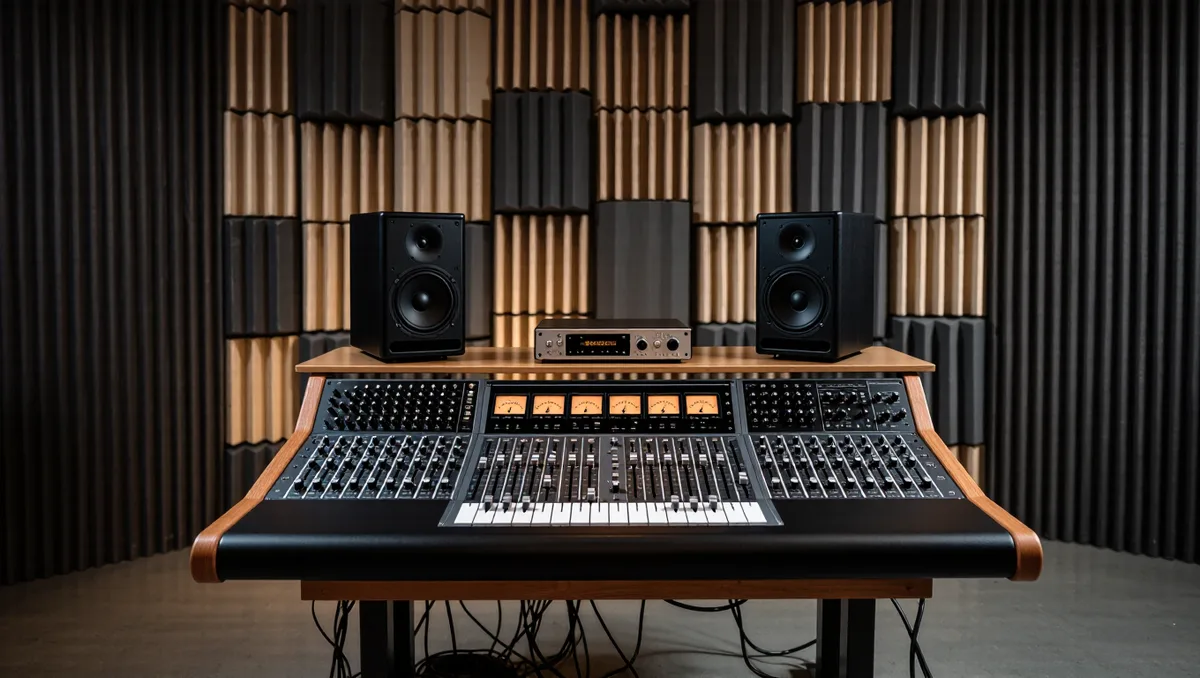
Results depend on critical listening, the engineer's skill, the accuracy of the monitors, and the listening environment, as the same Wikipedia entry notes. Software tools exist to help, but the job is still a pair of trained ears in a treated room.
Why can't one person do both?
Sometimes one person does, especially in bedroom and home-studio production, where a producer may mix and master their own work. But there are good reasons the roles are usually kept apart.
The first is fresh ears. A mix engineer has lived with the song for days or weeks and can no longer hear it plainly. A mastering engineer hears it for the first time, the way a listener will, and can spot problems the mix stage glossed over.
The second is the room. Mastering studios are built around full-range monitors and calibrated acoustics, because small mistakes at the final stage get copied into every version of the song forever. A mix decision can be revised; a master is the thing of record.
The third is specialization. Mastering engineers spend all day, every day, on this one narrow stage of the process. They know how a record will behave on a lathe, how a stream will survive a phone speaker, and how loud is too loud. That depth is hard to duplicate part-time.
What does mastering have to do with vinyl and streaming?
More than most listeners realize. A vinyl pressing plant cannot cut whatever file it is handed; the master has to be prepared with the physical limits of the groove in mind, which is one reason mastering remains a craft with format-specific knowledge. The economics of that format are covered in Vinyl Pressing Economics: Where the Money Goes.
Streaming adds its own constraints. Platforms normalize playback levels, so a master that is simply the loudest possible file can end up quieter, or flatter, than a more dynamic one once the platform adjusts it. The loudness debate that shaped the CD era carries straight into the streaming era, and the mastering engineer is the person negotiating it.
There is also the safety-copy tradition. It is standard practice, as the Wikipedia entry records, to make a copy of the master recording in case the master is lost, damaged or stolen. The master is an asset, not just a sound file.
What this means for artists on a budget
Our analysis of how the two stages divide up leads to a practical split: spend your limited money where the risk is highest. A weak mix cannot be fixed at mastering. Mastering can polish, level and sequence, but it cannot pull a vocal forward or rescue a muddy low end; it works on the stereo file as a whole. If you can only afford one outside professional, a good mix usually buys more than a good master.
That said, skipping mastering entirely is a false economy for anything you plan to release widely. Distribution, playlists and comparisons against commercial releases all expose an unmastered track quickly. Independent artists working from home can study the trade-offs covered in How Bedroom Producers Really Reach the Charts, where the same budget questions come up.
A simple sequence for a self-releasing artist:
- Finish the arrangement before touching the mix. A mix cannot save a song that doesn't work.
- Mix with headroom, leaving level space for the mastering stage to work in.
- Get fresh ears on the mix before mastering, whether paid or trusted.
- Master once, against a reference track in the style you are aiming for.
- Check the master on cheap playback: a phone, earbuds, a car. If it falls apart, go back.
The last stage before the world hears it
Mixing and mastering are not rivals or duplicates; they are sequential quality gates. Mixing decides what the song sounds like. Mastering decides how the recording survives every system it will ever play on, and produces the master from which all copies flow. Confusing the two is common because both involve EQ and compression, but the intent differs: one shapes the music, the other protects it.
For artists, the useful takeaway is sequencing, not jargon. Get the mix right, then get the master right, and don't ask either engineer to do the other's job. The history is longer than the software: mastering's roots run back to the days when engineers cut masters directly to disc, and the discipline has kept its purpose through every format since. The tools changed. The job, preparing a recording to be copied faithfully for the world, did not.