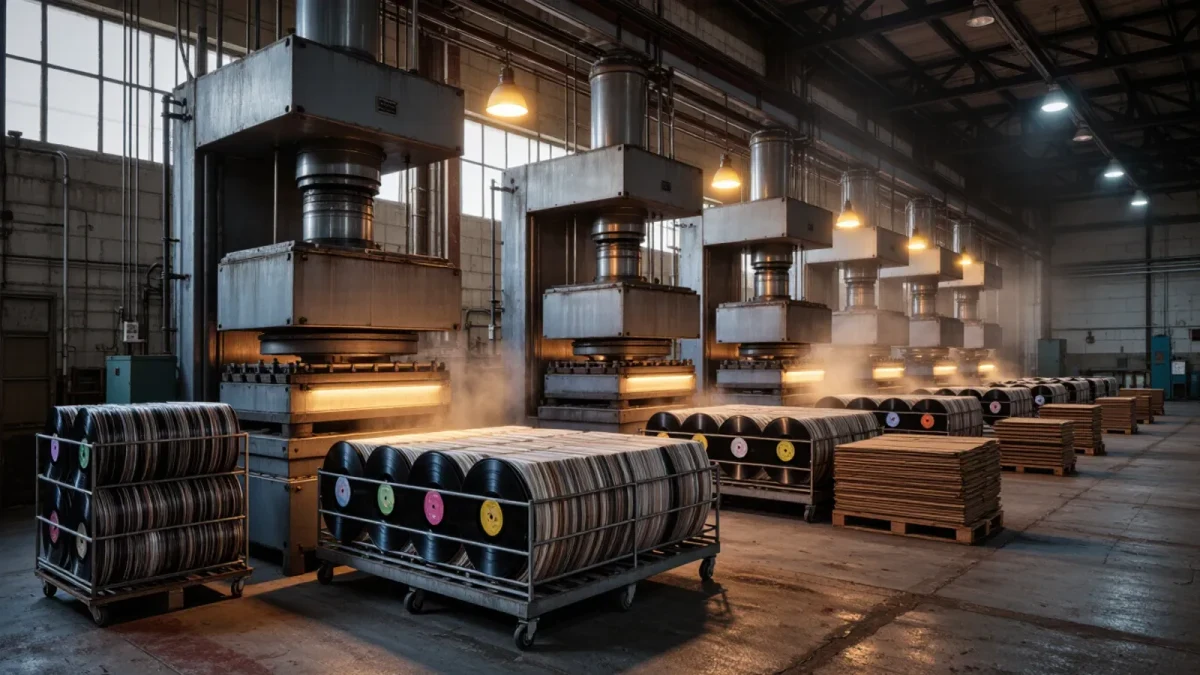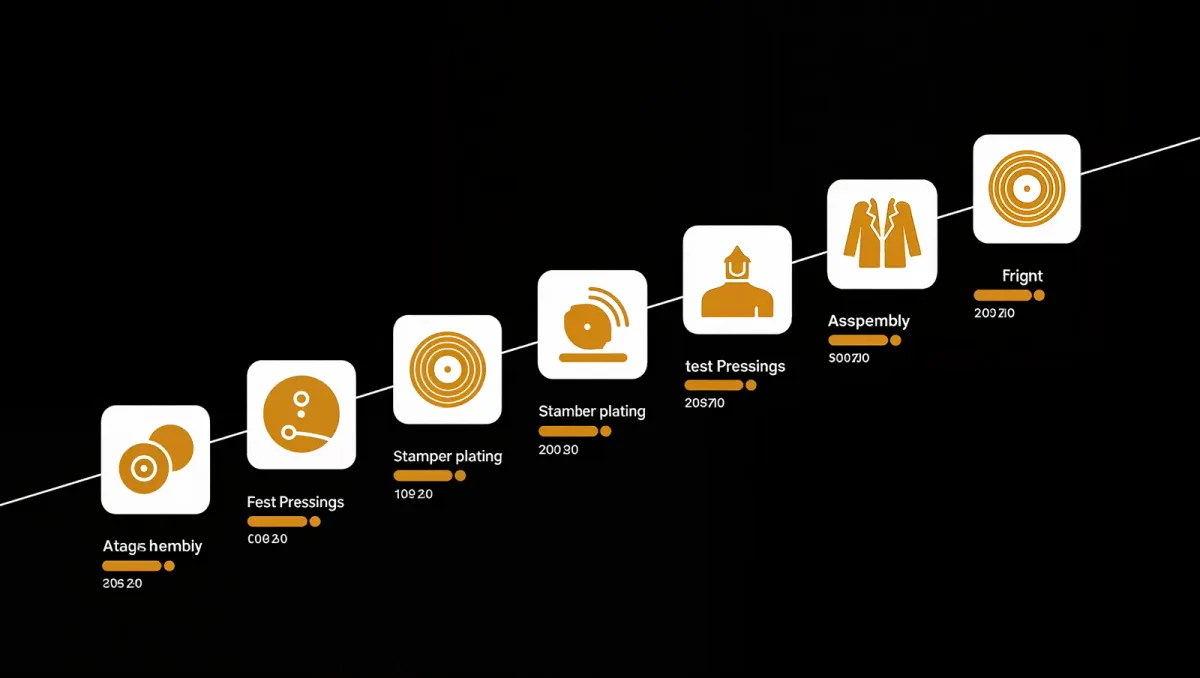
Why does a vinyl record that sells for $30 often make less money for an artist than the same album on streaming? Because pressing is manufacturing, not duplication. Per RIAA year-end reporting — vinyl outsold CDs in the US for the first time since 1987, as the BBC reported — vinyl revenue reached $1.4 billion in 2023, — the second straight year vinyl out-earned CDs — while lead times at plants that stretched to eight months or more during the 2021–2022 backlog only gradually normalized through 2024 and 2025. Between a finished master and a shrink-wrapped record sit at least seven costed steps, and each one prices differently depending on quantity, color and deadline.
What does it actually cost to press a record?
At standard run sizes of 500 to 1,000 units, US plants have quoted roughly $3 to $6 per finished LP in recent years including a basic jacket, with black vinyl cheaper than color and heavier 180-gram pressings adding cost. Below 300 units, per-unit pricing rises steeply because setup work does not scale. The hidden line items surprise first-timers: test pressings (often $75–$150 each), lacquer cutting and electroplating, jacket printing with correct spine width, inner sleeves, shrink wrap, and freight from the plant — which, for European artists using US plants or vice versa, can add more per unit than the pressing itself.
Why did delays get so bad, and are they over?
The crunch had a simple mechanism: demand for vinyl roughly doubled in the second half of the 2010s while pressing capacity barely grew, because most of the world's presses were scrapped in the 1990s. Reports through 2021–2022 described queues of six to twelve months at major plants. Capacity has since expanded — GZ Media in the Czech Republic, the world's largest plant, added lines, and automated press builders such as Viryl Technologies supplied new US facilities — and by 2024–2025 trade reporting described lead times closer to two to four months for standard runs. Color vinyl, picture discs and limited editions still queue longer because they require more manual handling.
Who are the big players?
GZ Media presses tens of millions of records a year for major labels. In the US, United Record Pressing in Nashville — operating since 1948 — remains the oldest continuously running plant, joined by smaller operations like Jacksonville's Qrates partners and independent plants in Texas, Colorado and Canada. Most indie artists access capacity through brokers or on-demand platforms, which pool orders to fill full press runs. The trade-off is control: pooling is cheaper, but release dates depend on the pooled run completing.
How do artists make the math work?
The margin structure forces discipline. A 500-copy run at $4 per unit plus $1,500 in setup costs lands near $3,500 all-in; selling at $25–$30 direct-to-fan returns a workable profit if 70% of the run sells, but wholesale to stores at roughly 40–50% of retail wipes the margin unless the run is larger. Practical choices that protect margin: one vinyl colorway instead of three, a standard-weight disc with a quality jacket instead of a deluxe box, and a pre-order campaign that sells before pressing, not after. Crowdfunded and pre-order-funded runs have become the standard risk hedge for catalog artists without label support.
Why do DJs still care about 12-inch singles?
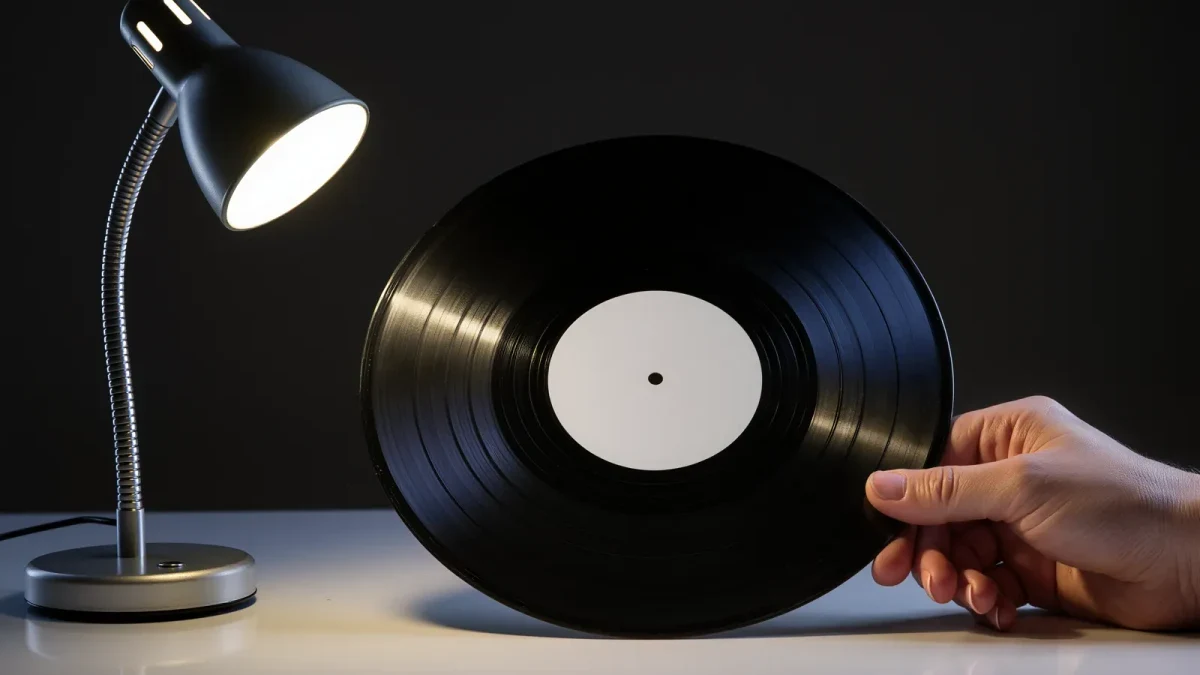
A parallel economy runs on 12-inch singles and 45s, and it prices differently. Club-oriented pressings exist for turntable use: louder cuts, wider grooves, often no jacket art beyond a plain sleeve, and runs as small as 100 to 300 copies. Electronic labels have kept white-label culture alive through this channel — a record pressed without printed labels, historically used for test purposes and pre-release DJ copies, now a deliberate aesthetic and scarcity play. Per-unit costs on tiny runs can exceed $10, which only works when a release sells at collector pricing of $15 to $20 or is bundled with event tickets. The lesson generalizes: on vinyl, scarcity is a pricing strategy, and pressing less can earn more than pressing more.
What does a plant quote actually look like?
Brokers describe a typical first-run quote sheet in five blocks. Plate work — lacquers, plating, test pressings — runs several hundred dollars regardless of quantity. Pressing is quoted per unit and drops sharply at 1,000 units versus 300. Print is quoted per component: jacket, inner sleeve, insert, each with its own setup fee. Color and special formats carry premiums, often 10 to 30 percent over black. Then logistics: freight, customs if the plant is abroad, and warehousing or direct fulfillment, which on-demand platforms charge per shipment. Reading the whole sheet, not the headline per-unit number, is the difference between a release that recoups and one that sits in a closet.
Does vinyl still matter in a streaming economy?
It matters disproportionately for how artists are discovered and priced. Vinyl is the format fans treat as merchandise-with-audio: per RIAA reporting, it is now the largest physical revenue line in the US, and Billboard incorporated vinyl sales into album chart methodology long ago. For touring acts, a crate of LPs at the merch table routinely out-earns a night of streaming royalties. Labels price special editions accordingly, and Record Store Day drops — which the RIAA and retailers have credited with successive vinyl sales records — continue to anchor the calendar each April and November.
What is next for pressing?
Expect steadier lead times and higher floor prices. New presses keep coming online, but raw PVC supply, lacquer aluminum and skilled plating labor set the real limits. For artists planning 2026 releases, the working assumption among brokers is simple: book capacity when the master is booked, treat the quote as a moving number, and never schedule a release date on top of a pressing queue you have not seen in writing.