Tour support is label money spent on a tour, and it is paid back from the artist's own share. Soundcharts' industry glossary lists tour support among the recoupable costs a label deducts from royalties, next to recording and video budgets, and Wikipedia's entry puts the typical recoupment rate at 15 to 20 percent of sales revenue.
The backdrop is a live market under strain. In April 2024, the Featured Artists Coalition described a cost-of-touring crisis to The Guardian, and acts signed to major labels described tours that had yet to pay them anything. Tour support has to be read against that arithmetic.
What Exactly Does Tour Support Cover?
Soundcharts' glossary, published in January 2026, places tour support in the recoupable column beside recording costs and video production. The expenses it offsets are the tour's own bills. Lily Fontaine, lead singer of the Leeds band English Teacher, listed them for The Guardian: tour manager, session musicians, agent, manager, crew, insurance, travel, accommodation, equipment, rehearsal space, production.
Everything on that list is paid by the artist, Fontaine told the paper. The support advance exists to keep those bills paid while the act is on the road, and its size is a matter for the deal. The label's accounting starts the moment the money moves.
How Does Recoupment Take the Money Back?
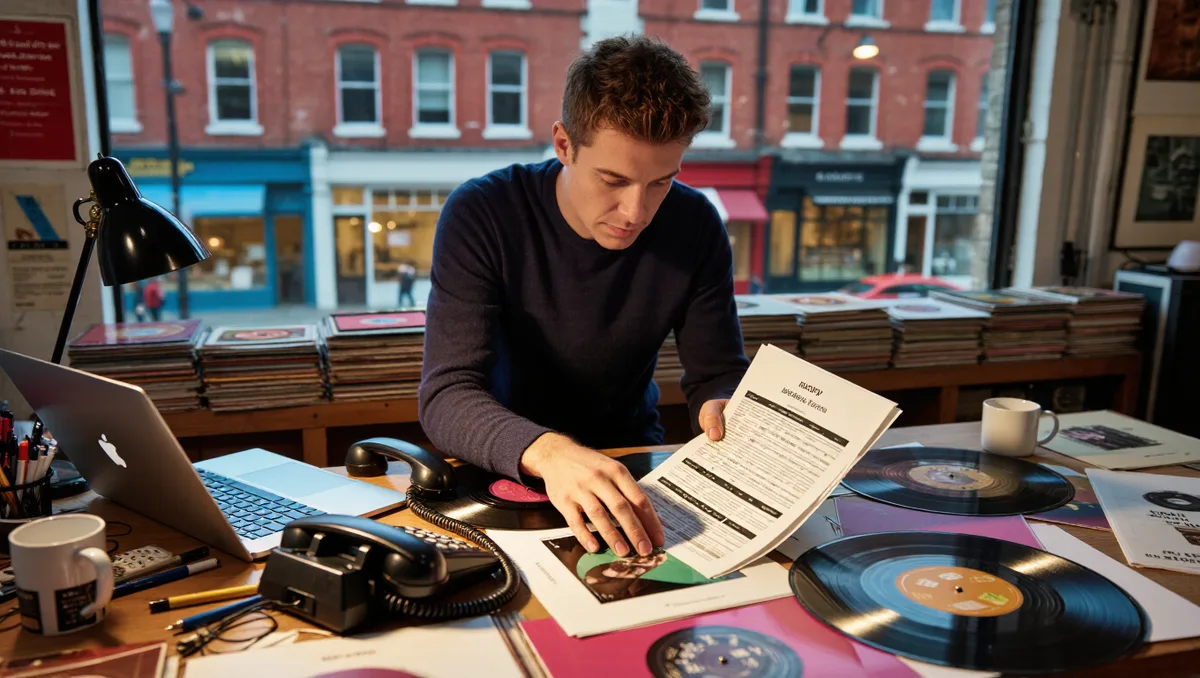
Recoupment is the label's recovery mechanism: the label pays expenses up front, then deducts them from the artist's royalties until the balance clears, per Wikipedia's entry on the practice. That entry puts the typical recoupment rate at 15 to 20 percent of sales revenue. It also notes that most new artists accept the terms, for lack of negotiating power to win better ones.
Direction matters here. Soundcharts stresses that recoupment usually draws only on the artist's share of royalties, not the label's side of the ledger. At a 15% royalty rate, the guide's framing goes, the debt is paid back with 15 cents of every dollar the record earns. Many artists sign large advances and never see a royalty check, the same guide warns. Readers following this should also see Why So Many 2026 Music Festivals Canceled Before Spring.
What Does the Math Look Like on an Advance?
Wikipedia's worked example hands a band a $250,000 advance and gives the label 90% of sales. The album sells 301,000 copies at $10, and the label recoups the full advance out of the band's $301,000 royalty pool. The band's effective net in that example is $51,000.
Soundcharts runs a plainer version: a $50,000 advance plus a $10,000 recoupable video is $60,000 of debt, and at $2 of royalty per album the act must sell 30,000 copies before a single check arrives. The guide adds cross-collateralization, a clause that lets royalties from one album pay another album's unrecouped balance.
What Happens When Touring Pays Nothing Back?
English Teacher is signed to Island, a major label, and still had no touring profit in the band's first four years, as The Guardian reported in April 2024. Bandmate Lewis Whiting told the paper the group had never directly paid itself from a gig, and had drawn £500 a month from an advance that had since run out. Festivals were the only dates that turned a profit.
The same piece documents the margins underneath. A headline fee ran £600 at a 200-capacity Newcastle club against £3,000 at a 1,500-capacity London room, and manager Dan Potts put support-slot fees flat for a decade, from £50 at the small end to £500. The band Japanese Television cut a 13-date tour to eight shows, adding a five-day gap worth around £1,200 of extra loss to a run already set to lose about £700. We covered a connected angle in Billboard 200 in January 2026: Four Number Ones in Four Weeks.
Conclusion: An Advance Is a Loan with a Long Tail
Tour support is not a gift and not a wage. It is a first bite of royalties the record has not earned yet, taken at a rate set in the deal and stretched across albums by cross-collateral clauses. The acts it serves still count on the door, the merch table and the festival fee, because the advance repays the label first.