A&R scouting starts long before anyone mentions a deal. Scouts hunt for a working pattern: real songs, a growing audience, and evidence the artist can keep delivering both. According to Wikipedia's entry on artists and repertoire, the A&R division of a label is responsible for finding new artists and bringing them to the company, then overseeing how their music gets made.
That search happens across small venues, streaming dashboards, and a scout's own network of managers and producers. It rarely happens by accident. The job has changed shape since the days of a single person watching from the back of a club, but the underlying question hasn't: is there a real artist here, and can this company help build what comes next?
This piece breaks down where scouts actually look, what they're listening and watching for, and how an artist puts themselves in a position to be found — all drawn from how the role is described by people who've worked inside it.
Where Do A&R Scouts Actually Look for Talent?
Scouts build several discovery channels at once rather than relying on one. According to Music Jobs' reporting on the role, sources include small venues and local promoters, showcase festivals and support slots, artist managers and music lawyers, producers and songwriters, student radio, and platforms like Spotify, YouTube, TikTok, SoundCloud and Bandcamp.
Music analytics tools and online genre communities round out the list. The point isn't to check every platform equally. It's to notice an unusual pattern before it shows up on a mainstream chart. By the time an artist is trending everywhere, the most active scouts have often been watching for months already, per the same reporting.
Word of mouth still carries real weight. Wikipedia's overview notes that A&R executives rely mostly on trusted associates, critics and business contacts rather than unsolicited demos. A referral from someone a scout already trusts tends to open doors faster than a cold submission ever will.
What Are Scouts Actually Listening and Watching For?
Fans listen for pleasure. Scouts listen for evidence. Music Jobs' reporting frames the core question as whether there's a distinctive artist, a genuine audience response, and a company that could actually help develop what happens next — not simply whether one song sounds good. We covered a connected angle in Sync Licensing: How a Song Gets Into a TV Show.
Practical checklist scouts reportedly work through, per that same source, includes:
- Does the artist have a recognisable identity, not just a decent track?
- Can they write or choose strong songs more than once?
- Is this one good release, or part of a developing body of work?
- Does the artist seem to know what they want to say?
- Can they perform live, and are people returning after the first listen?
An unusual voice or production choice can be enough to trigger a closer look. It's rarely enough, on its own, to justify signing anyone. The Festival Pro overview of the role adds that scouts also weigh vocal, instrumental and songwriting ability against their own read on audience taste and market timing.
Stage presence gets its own scrutiny. Scouts attending a gig aren't only watching the performance; per Music Jobs, they're also clocking how an artist handles a mistake, whether the crowd already knows the words, and whether people in the room actually travelled to see this act rather than just showing up for a friend's set.
How Do Streaming Numbers Get Interpreted?
A spike in monthly listeners means very little without context. Music Jobs' reporting notes that two artists with identical listener counts can be in completely different positions, since a surge might come from a big playlist add, a viral clip, a sync placement, paid promotion, or a short-lived trend rather than lasting audience interest.
Scouts reportedly dig into where the growth is happening geographically, whether listeners explore more than one song, whether followers convert into ticket buyers, and whether the momentum holds once any promotional push ends. That's a different kind of research than watching a single number climb. It also explains why an artist can look "hot" for a week and disappear from consideration just as fast.
Streaming data works best as a pointer rather than a verdict. It tells a scout where to look closer. It doesn't replace the live show, the catalogue, or the conversation with a manager who already knows the artist's habits and reliability.
This is part of why an act's path to attention can look so different depending on where it started. A bedroom artist building an audience one release at a time, as covered in how bedroom producers really reach the charts, is judged on a different timeline than a band already drawing crowds at small venues.
How Does the Signing Process Actually Work?
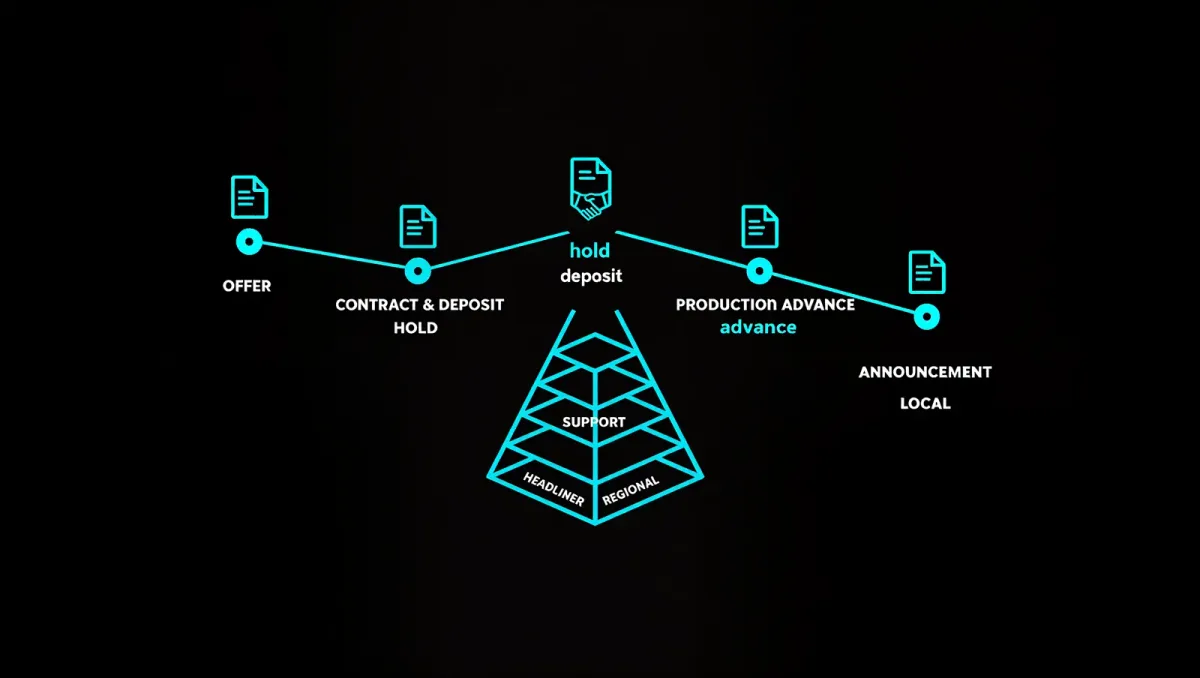
An A&R executive who wants to move on an artist typically starts with what Wikipedia's entry describes as a "deal memo" — a short, informal document establishing the business relationship, with full contract negotiations handled afterward by entertainment lawyers. The scout's job doesn't end once someone is signed, either.
Festival Pro's overview describes A&R involvement continuing into career development: helping arrange high-quality recording sessions, shaping marketing and distribution, and sometimes negotiating contracts and agreements directly with an artist's management. The Heat On The Street guide to getting a record deal makes a related point: signing isn't the finish line, since a label doesn't run an artist's day-to-day business or guarantee continued investment if the first release underperforms.
Once a record is finished, the A&R department works with marketing and promotion to pick a single, per Wikipedia's summary of the process. That choice can shape how a project is introduced to the public more than almost anything else in the rollout.
What This Means for Artists Trying to Get Noticed
The practical takeaway is less about chasing a title and more about building the pattern scouts are trained to look for. Music Jobs' reporting notes that dedicated "A&R Scout" job postings are rare; the same responsibilities often sit inside titles like A&R Assistant, Label Coordinator or Artist Development Assistant, so an artist's manager reaching the right person may matter more than the label on their door.
Festival Pro's overview points to concrete steps: consistent social coverage across platforms like Instagram, TikTok, YouTube, Spotify and SoundCloud, a mix of live and studio material, and a manager willing to invite scouts to actual shows. None of that guarantees a deal. It does put an artist inside the channels scouts already monitor.
What's still unclear from available reporting is how much weight any single factor carries relative to the others in a given case — a viral clip versus a strong live set versus a trusted referral. The sources describe a checklist, not a formula, and the people applying it are making a judgment call each time.