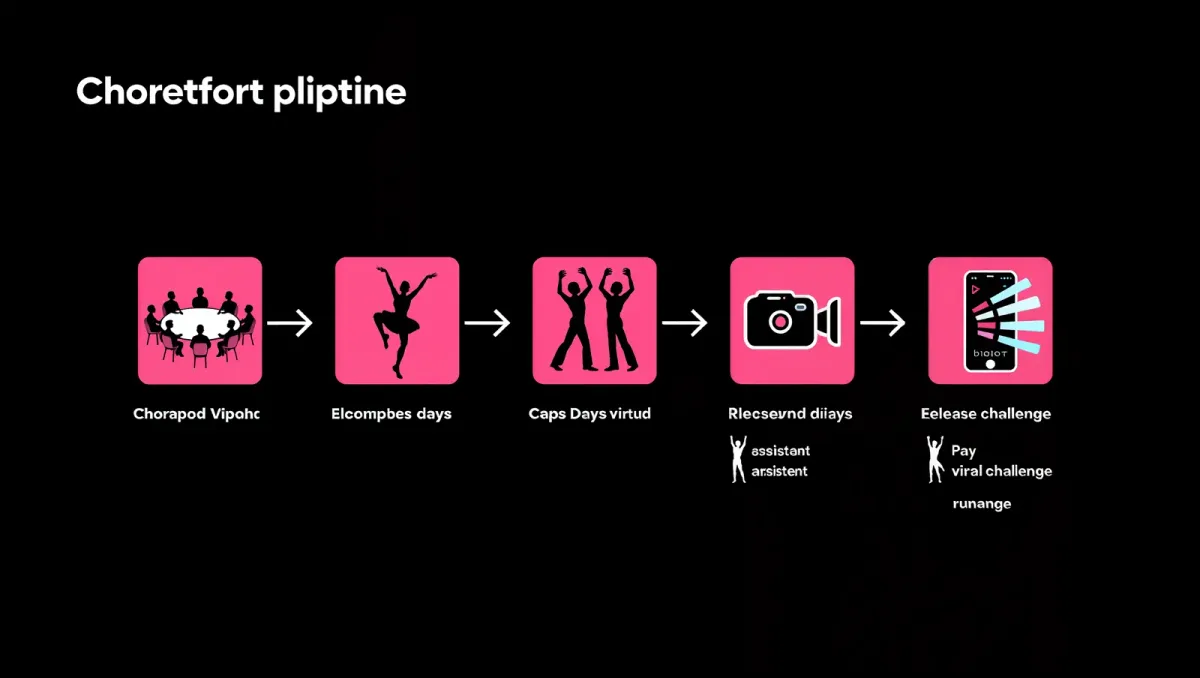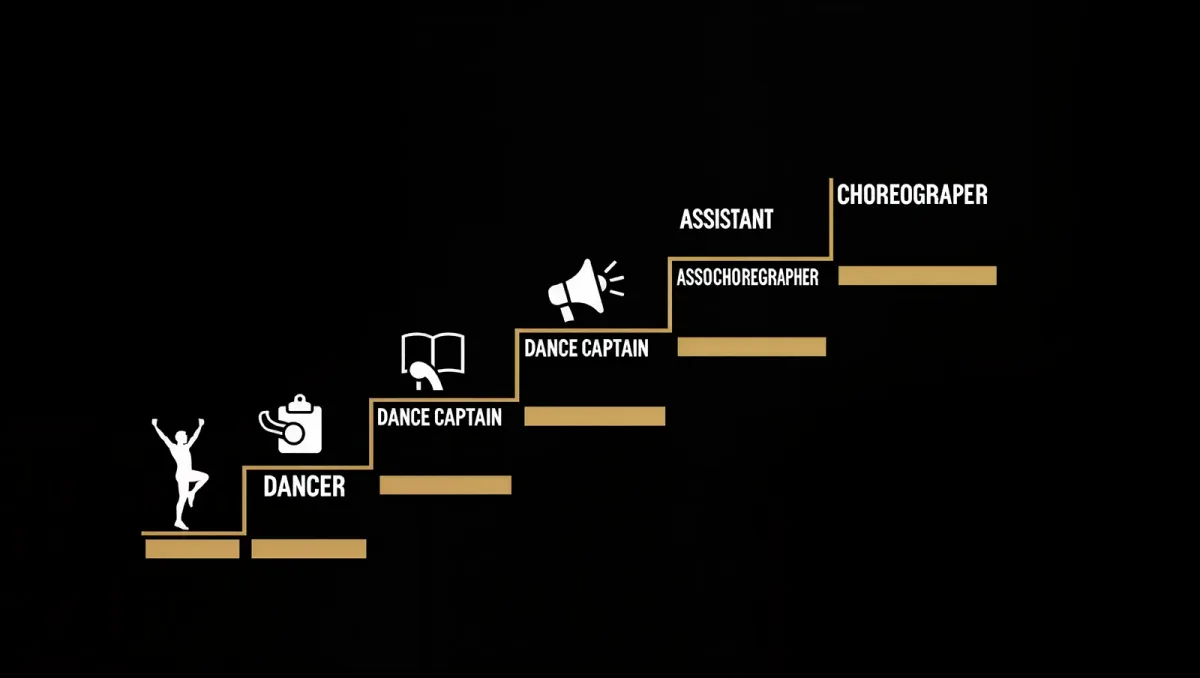
How does a dancer become the person who invents the choreography? Not by one lucky break, but by a ladder the industry has named at every rung: dancer, dance captain, assistant choreographer, associate choreographer, then lead choreographer or movement director. The ladder is visible in credits — theater programs have listed associates for decades, and music-video and tour credits increasingly do the same — and it is learnable: each rung has a defined job, a defined pay relationship and a defined way to be hired into the next one. Here is the climb, rung by rung, as the profession itself describes it.
This is career and industry reporting; pay relationships are trade-standard as of 2025, and union agreements set exact figures on covered work.
Rung one: what does a dance captain do?
The dance captain — a title from theatrical tradition, now used across tours and commercial productions — is the working dancer who keeps the cast consistent. Day to day: leading warm-ups, running understudy and swing rehearsals, giving notes after watching the show from the house, and stepping into the line when a slot opens. It is the industry's first promotion because it tests the management half of leadership: can a peer give correction, keep a show's standard across months, and answer to both direction and cast? Pay on covered productions follows union scales with an addition on top of dancer base; on non-union work, the title carries a negotiated bump that is smaller but real. Every choreographer's career file treats dance-captain time as management experience, because it is.
Rung two: what does an assistant choreographer actually do?
The assistant is the choreographer's right hand and the production's translator. The documented work: demonstrating movement for the room, running rehearsals the lead choreographer cannot attend, managing dancers and schedules, taking the choreographer's corrections and delivering them, and on shoot or performance days standing in the director's sightline solving problems the choreography meets in the real venue. Assistants travel with the choreographer's projects and absorb their method — rehearsal structures, counting systems, casting instincts — which is why the role functions as the industry's apprenticeship and why assistants increasingly negotiate credit and fees as named positions. The path in is straightforward and demanding: a choreographer hires assistants they trust from their own casts, so working consistently with a choreographer whose work you respect is the recognized entry move.
Rung three: what is an associate choreographer?
The associate rung is a formalized second-in-command, strongest in theater and large-scale live production. An associate choreographer sets the show in a second company or city, maintains it across a long run, directs rehearsal periods in the lead's absence, and often handles the remount and tour transfers — the positions where institutional knowledge decides whether the show survives. Credits list associates precisely because responsibility is real: an associate can be the person a production actually deals with week to week. For choreographers in training, the associate role is the bridge credential: it proves you can carry a full production's movement, not just its rehearsals, and theater's credit culture makes the proof legible to everyone who reads a program.
Rung four: the lead choreographer's job
At the top rung, the job changes from execution to authorship and pitching. Lead choreographers — or movement directors, the parallel title that grew through fashion, film and music video — originate the work: pitching concepts to directors and labels, casting, building assistant teams, and owning the work's quality under deadline. The business side matters at this rung: choreographers operate with agents or managers, negotiate fees scaled to project and usage, and manage ancillary rights — a live issue the profession has organized around since choreography's ownership questions gained public attention. Income at the lead level is project-based and volatile, which is why established choreographers diversify across video, tour, brand and theater work rather than living on one pipeline.
What changes first when you reach the lead rung?
The working answer from established choreographers' published interviews is consistent: the calendar and the risk. Assistants execute someone else's decisions on someone else's schedule; leads sell ideas before they exist, assemble the team that will realize them, and absorb the difference between the pitch and the room. Financially the rung flips the payment direction too — leads carry insurance, team payments and tax complexity as project businesses rather than paychecks. The emotional adjustment is the least discussed and most mentioned in retrospect: moving from solving problems to owning them. Veterans describe building slowly on purpose, keeping assistant work during early lead years to stay inside rooms, and letting the lead credits accumulate until the market treats the title as settled. The ladder rewards patience precisely because everyone can see who skipped it.
How does the industry verify the climb?
Credits, relationships and results — in that order of debate. Credit culture has tightened as the profession organized: unions and industry associations have pushed for accurate choreographer and assistant credits, and public disputes over uncredited work have made verification a shared interest. Agents and producers check a candidate's credits against the productions' records, and word from the room — how a candidate ran rehearsals, treated dancers, handled a director's changes — travels faster than any resume. The practical playbook for climbers follows directly: take the named rungs, insist on the credit each rung earns, and treat every rehearsal as the audition for the next title, because in this industry it is one.
What is next for movement careers?
The ladder is lengthening rather than shortening: movement-direction work keeps expanding into film, fashion and advertising; immersive and tech-driven productions need choreographic leads who can work with new-media teams; and the profession's organizing gains — credit standards, rehearsal pay, ownership advocacy — are making the middle rungs more sustainable than they were a decade ago. The entry logic has not changed and likely will not: the industry promotes people who already do the next job's work, and the ladder simply names where that work should be visible.