A scripted drama season is written before a single frame shoots, and it is written collectively: a showrunner's room of five to nine writers breaks every story beat on cards before anyone drafts a page. Under the Writers Guild of America's Minimum Basic Agreement, every one of those writers works on a scale contract — the MBA sets separate minimums for staff writers and for story editors and above, which is how the industry formalizes the room's ladder. This piece publishes information, not career advice.
What is the hierarchy in a writers room?
The ladder runs from staff writer at the bottom through story editor, executive story editor, co-producer, producer, supervising producer, co-executive producer and executive producer — ranks the WGA MBA recognizes by title with rising minimums. At the top sits the showrunner, the head writer and chief executive of the series, who answers to the studio and network. Rooms add specialized seats: a co-executive producer often runs the table as room second, and newer rooms split into episode teams with a senior writer leading each.
How does a season actually get broken?
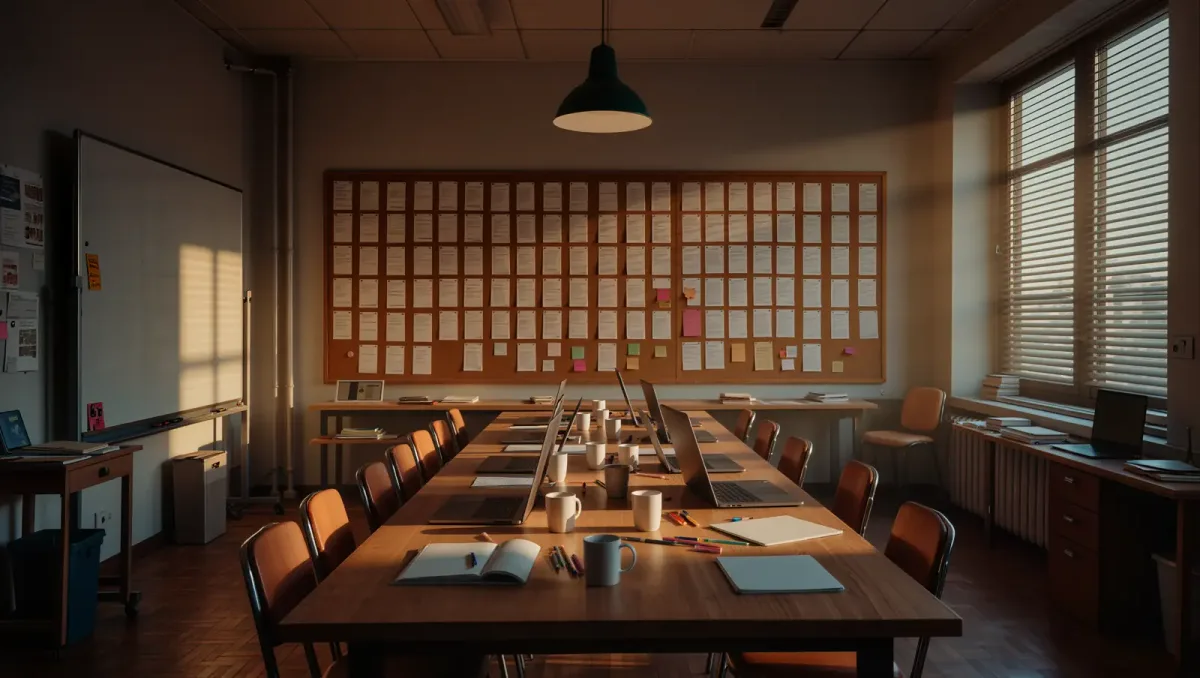
The room starts with the season arc: the showrunner's premise, then weeks on a whiteboard moving index cards — act by act, beat by beat. When an episode's outline wins approval, one writer drafts it, the room gives notes, the writer revises, and the showrunner polishes. Each episode carries a writing credit decided by guild arbitration rules, which weigh outline, draft and polish contributions. A broadcast season of 22 episodes once ran a room for most of a year; the streaming-era season of eight to ten episodes compresses the same process into months.
What is a mini-room?
Mini-rooms are smaller, shorter writing phases hired in advance of a greenlight: a handful of writers break a season in six to ten weeks so a studio can shop the project fully written — or use the room as development only, without a production commitment. The 2023 WGA strike put mini-rooms at the center of the guild's demands; the resulting 2023 MBA added provisions on room size and writer access to production, including guaranteed presence on set and in post for writers in covered rooms. The model persists because it concentrates cost up front, but the guild fought its worst version — rooms hired to write scripts that never produce employment beyond the room.
How does a writer get staffed?
Staffing runs through representation: agents and managers pitch writers to showrunners, general meetings convert to interviews, and a spec script or writing sample does the selling. The guild's annual career-long movement data show how narrow the funnel is — hundreds of writers staff for a season while thousands sell samples. A first staffing is typically staff writer; promotion comes room by room as credits accumulate. Writing programs at the major studios and networks — paid fellowships that end in staffing meetings — are the other documented on-ramp.
What is next for writers rooms?
Summer is the staffing season for fall room starts: showrunners are filling seats for rooms that break seasons ahead of 2027 production windows, and the post-2023 contract terms on room size and production access are now standard paperwork. For writers, the durable math holds: one strong sample, one general meeting at a time, up a ladder whose every rung has a guild minimum attached.
What does a writers room day actually look like?
Longer and less dramatic than the whiteboard scenes on television. A typical day runs ten to twelve hours: the room reconvenes on yesterday's beats, argues through the act breaks on the episode being broken, breaks for lunch, and ends with the showrunner assigning overnight work — an outline, a punch-up list, a draft of a scene. Table reads punctuate the cycle when a draft is ready, with the room performing the episode aloud to hear pacing. The writers guild's contract governs the structure of this labor — turnaround minimums, compensation for each written step — but the culture of the room is set by the showrunner, and working writers describe room cultures ranging from fiercely collaborative to rigidly hierarchical as the single biggest factor in whether a staffing is worth taking twice.