Every stunt an audience sees on screen has already been rehearsed, negotiated and insured, and the person taking the hit is a specialist whose industry runs on precision rather than bravado. The guild at the center of it, SAG-AFTRA, maintains dedicated stunt and safety provisions in its theatrical contracts, and the Academy — after years of campaigning by the stunt community — announced that a stunts design achievement Oscar will first be awarded at the 2028 ceremony for films of 2027. That recognition arrived roughly a century after the work began. This piece publishes information, not advice.
What does a stunt performer actually do?
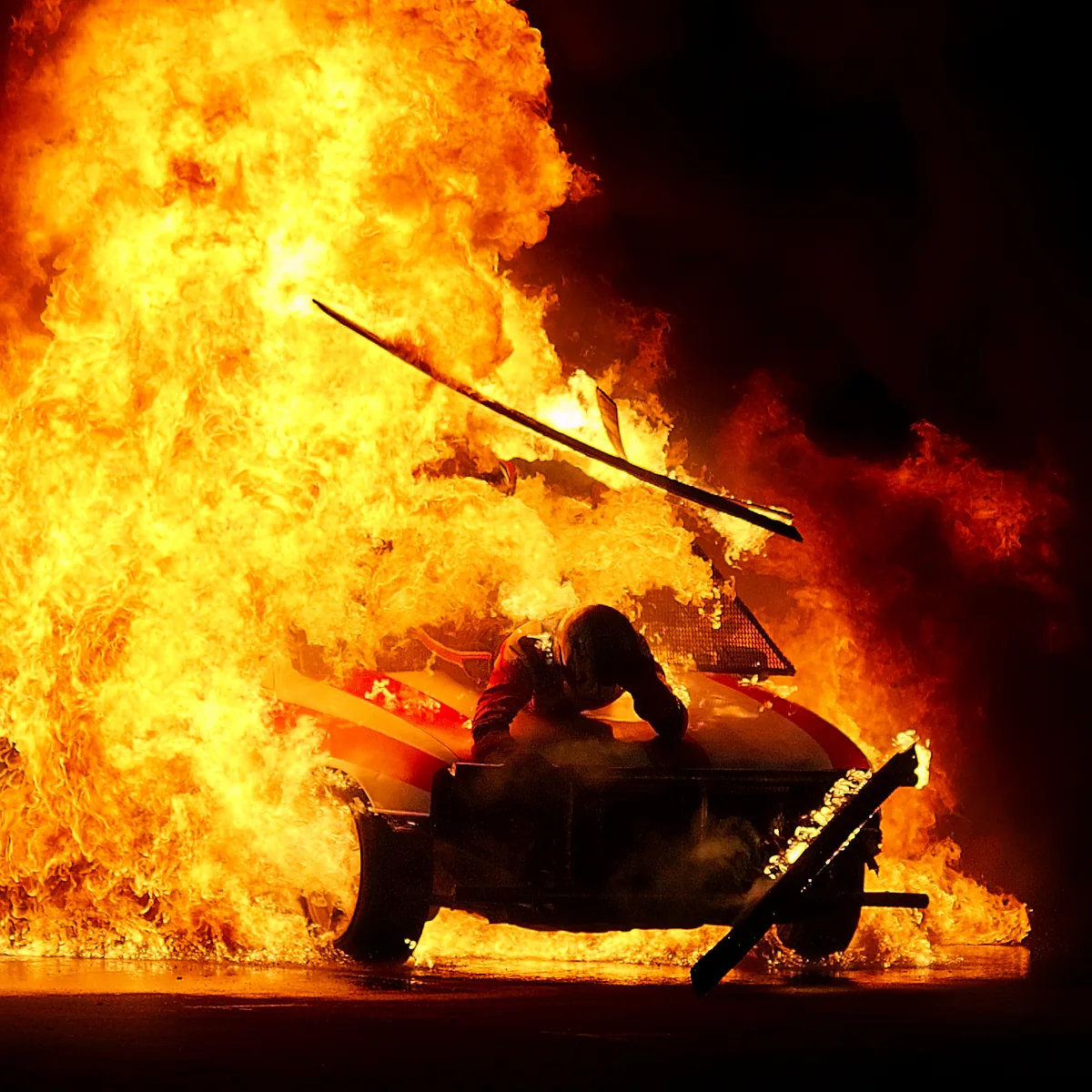
The trade splits into stunt performers, who execute sequences, and stunt coordinators, who design them and run set safety. Within that, specialists stack: high falls, wire work, fight choreography, precision driving, fire burns, water work. A coordinator breaks a script's action into beats, budgets each one, rehearses with the cast for weeks, and decides which beats a double takes versus the actor. On any given production day, a stunt team can range from two people on a drama to dozens on an action feature.
How does someone get into the field?
There is no diploma. Entry runs through measurable, certifiable skills — gymnastics, martial arts, motocross, diving, horse work — plus a industry network that starts with background work and day-playing on sets. Most working performers hold multiple specialties, because a coordinator staffs a team by matching bodies to specific gags. Some markets formalize entry: British action performers pursue the Joint Industry Stunt Committee's qualification route, a logbook system requiring proof across six skill categories — widely cited as one of the strictest stunt entry standards in the world.
What is the money like?
Screen Actors Guild scale sets floors for stunt performers and coordinators, with rate adjustments for hazardous work: fire burns, high falls, vehicle gags and similar stunts carry negotiated adjustments on top of base session fees. Stunt coordinators earn separate, higher scale rates. Beyond scale, top coordinators negotiate package deals on action franchises. The work is episodic by nature — a stunt performer may work three days on one production, then pivot to another — so annual income depends on stacking bookings across a year.
Who carries the risk?
Productions carry insurance, and safety culture is contractual: rehearsals, safety meetings, the performer's right to decline an unsafe gag. The history is sober nonetheless — the stunt community keeps memorials for performers killed on sets, and high-profile on-set fatalities have repeatedly driven contract and safety updates, most visibly the industry-wide safety conversations after the 2021 Rust shooting reshaped armory and firearms protocol on US sets.
Why the push for awards recognition?
Campaigners argued for decades that the Academy's crafts categories ignored the discipline that defines action cinema. The turn came in 2025, when the Academy of Motion Picture Arts and Sciences confirmed a new achievement in stunt design category, with the first award scheduled for the 2028 Oscars covering 2027 films. Coordinators describe the category as validation that also carries a practical effect: awards attention funnels into credits, rates and career length.
What is next for the stunt trade?
The spring production calendar is stacked with action features shooting through summer, keeping stunt teams booked across the incentive states, and pre-production on 2027 releases is where the first stunt-design awards campaigns will quietly begin. For performers, the career math stays the same: specialties that certify, contacts that book, and a body managed like the production's most valuable equipment.
What does a typical work year look like?
Fragmented by design. A working stunt performer stacks a stunt-double day on a series here, a two-week coordinator gig on an indie there, plus commercial and music-video gags that fill calendar gaps. Union health and pension participation depends on covered earnings, so professionals track their covered days the way freelancers track invoices — a light quarter can jeopardize qualification thresholds. Geography matters as well: the incentive states that host action production concentrate the bookings, and performers relocate or commute accordingly, with Atlanta, Los Angeles, Toronto and London the perennial hubs. Late-career paths run toward coordination, second-unit directing and stunt team management, where the skill converts from taking the hit to designing it.