What happens inside a dance company between premieres? Someone keeps the repertoire alive, and that someone has a title: the rehearsal director. In major companies across ballet and contemporary dance — European ensembles made the role institutional, and American companies run equivalents under titles like ballet master or company manager — the rehearsal director is the bridge between the choreographer who made a work and the dancers who must reproduce it tonight, next month and, often, years later after the maker has left the building. It is one of the least visible jobs in dance and, by the account of every company that employs one, among the most load-bearing.
This is craft reporting on a documented company role; structures vary by organization.
What does the role cover day to day?
The job runs on three clocks. Daily: leading company class or warm-up when the artistic staff does not, scheduling studio space, running rehearsals for works in the active repertoire, and adjusting plans around injuries — a casting board redrawn weekly is normal. Production: during creation periods, the rehearsal director manages studio logistics, takes notes for the choreographer, tracks counts and spacing on video, and keeps understudies rehearsed without exhausting the cast. Legacy: maintaining the company's memory of works — video archives, notation or written counts, casting histories — so repertoire survives cast changes. The role requires equal parts pedagogy, diplomacy and administration, which is why experienced dancers, not administrators, usually hold it.
How does someone become a rehearsal director?
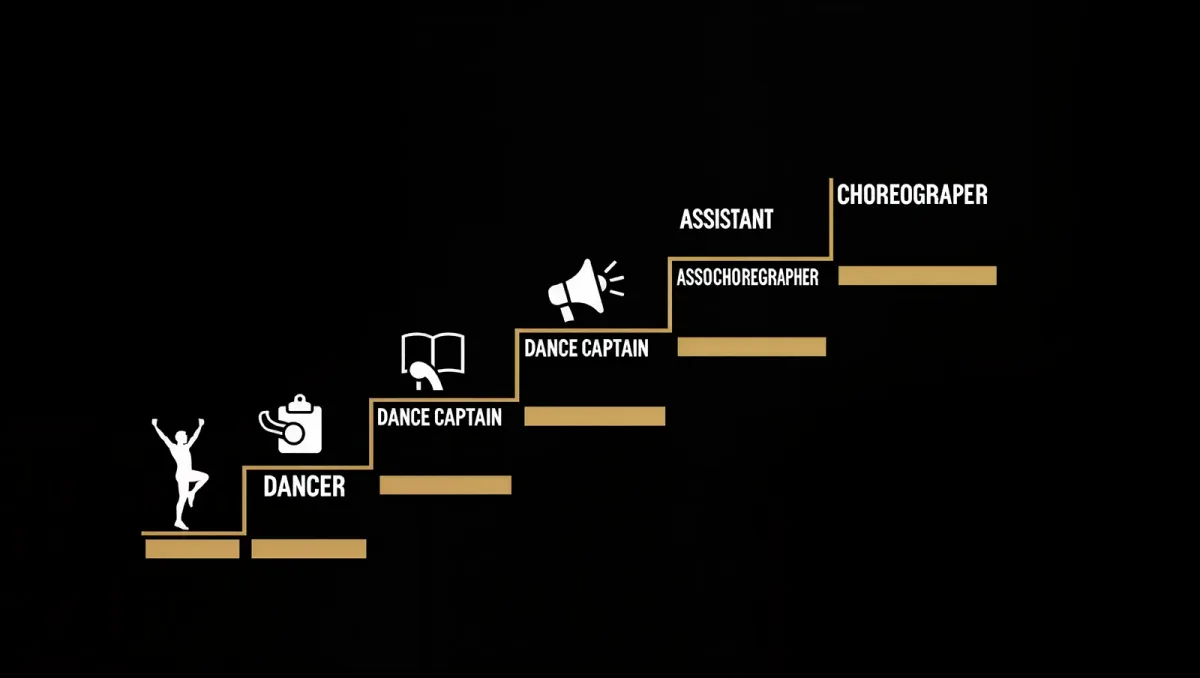
The path runs through the studio. Most rehearsal directors were professional dancers who spent a decade or more in companies, developing the repertoire knowledge and the cast's trust that the job requires; companies typically promote from within or hire former dancers of the artistic director's own works, since reproducing a choreographer's style from the inside is the core skill. Formal credentials — pedagogy training, notation certification such as Labanotation, arts management — help but do not substitute. The trade's honest description: it is a second career inside the first one, trading the stage for the authority to preserve what happened on it, and the transition is significant enough that companies increasingly describe mentoring for it explicitly.
What happens when a work is remounted?
Remounting — reconstructing an existing choreography on a new cast or a new company — is a specialty within the role, and the industry has developed a documented toolkit for it. When the choreographer is available, they or their repetiteur — a designated holder of the work's details — set the piece; when they are not, the rehearsal director works from video archives, notation scores, former dancers' bodies and written counts. Choreography rights add a legal layer: works by major choreographers are licensed through their estates, foundations or agents, and licenses often stipulate who may set the work and how faithfully — a structure that exists because preservation quality is a real artistic and financial stake for choreographers' legacies. Major reconstructions of historical ballets and mid-century modern works have made remounting practice itself a subject of public discussion in the dance press.
How does the job work on tour?
Touring compresses the role's demands. Advance teams and stage managers handle venues, but the rehearsal director owns the company's body: daily class in unfamiliar studios, spacing calls on unfamiliar stages — where dimensions differ enough to require re-blocking — and keeping second casts warm during long runs. International tours add casting depth problems: injuries abroad have no quick replacements, so the rehearsal director maintains readiness across the roster rather than a starting eight. Veteran touring rehearsal directors describe the job as weather-reading — adjusting class intensity around show density, jet lag and stage surfaces before problems become injuries, a skill that overlaps directly with the dance-medicine practices companies have adopted.
How does the role differ between ballet and contemporary companies?
The title signals the difference. Ballet companies operate the historic hierarchy — ballet masters and mistresses, their authority anchored in codified technique and repertoire dating back centuries — while contemporary ensembles favor rehearsal director, a role defined less by a canon than by the current artistic director's practice. That changes the job's texture: in ballet, much of the repertoire predates everyone in the building, so the work is faithful transmission of established text; in contemporary companies, much of it was made in the last decade, so the work is closer to living collaboration, often with choreographers still revising works between runs. Repertoire companies that do both maintain both sensibilities at once, and the rehearsal directors who move between the worlds describe adapting their authority model — earned through rank in one system, through proximity to the maker in the other.
Why does the role matter for dancers' careers?
Because the rehearsal director is the company's memory and its casting conscience. Dancers' promotion prospects run partly through repertoire coverage — who can be trusted with which roles — and the rehearsal director's evaluation carries that weight. The role also shapes the ensemble's health: the person setting daily tone influences how injuries are reported, how understudies develop and how the company's style holds across a generation of hires. Former rehearsal directors are increasingly visible as artistic directors themselves, a career pattern the field notes with approval: the institution's memory-keeper is often its best candidate for steward.
What is next for the role?
Two currents run through the job as of the mid-2020s. Digital archives are changing legacy work — high-quality video capture, and projects preserving choreography through motion capture, give rehearsal directors tools the video-to-VHS era never had, with real debates about what notation and recording can and cannot carry. And the profession is formalizing: companies increasingly list the role in leadership structures, unions and associations cover it in agreements, and training pathways are discussed openly where the job once passed by apprenticeship alone. The room still runs on the same core competence it always did: knowing the repertoire in the body, and knowing the dancers well enough to put the right one in the right spot at the right hour.