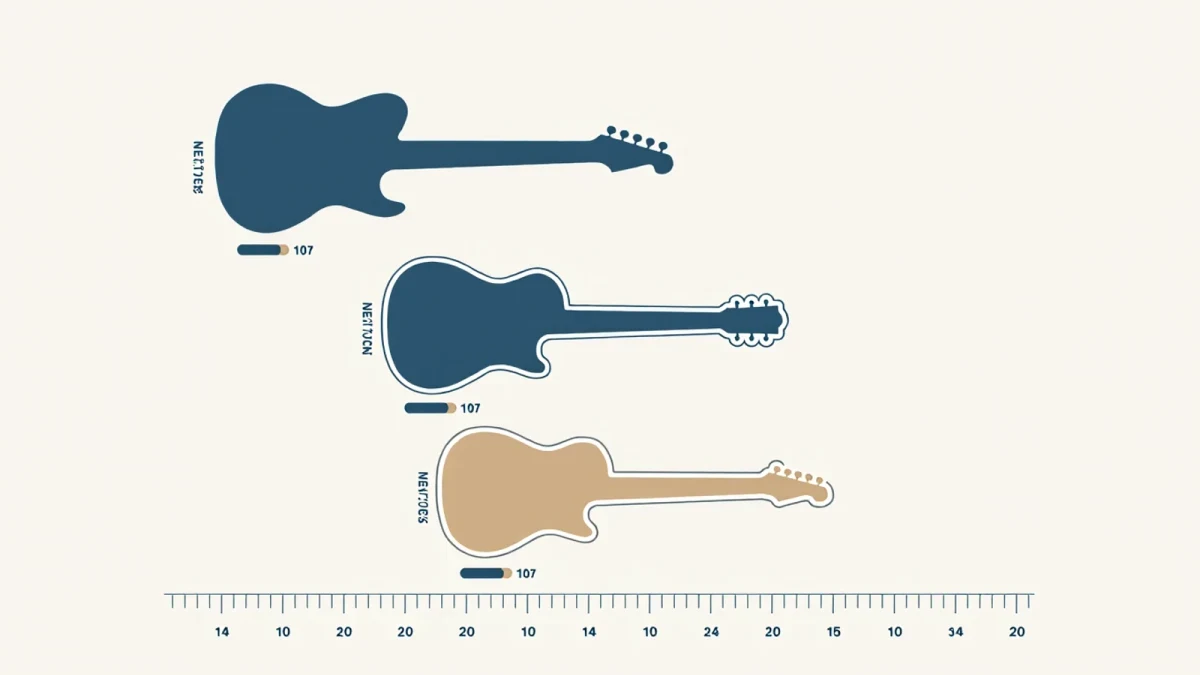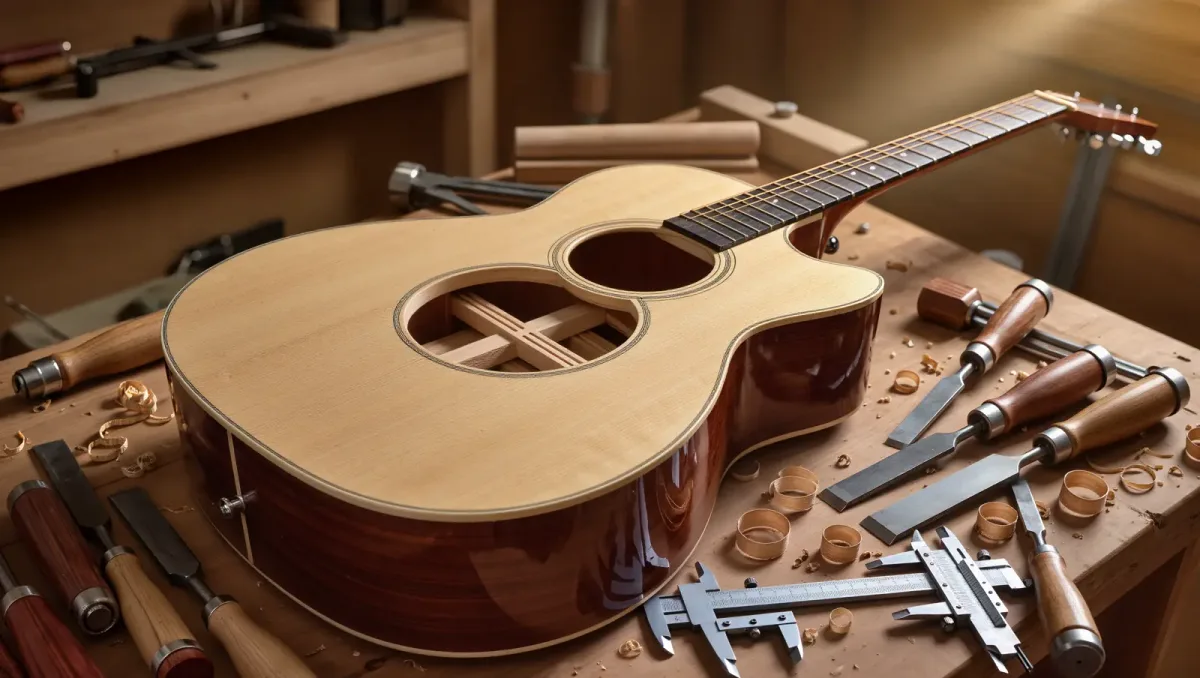
Why would a working guitarist pay $6,000 or more and wait two to five years for a custom guitar when a factory-made instrument costs $600 and plays beautifully? Because at the top of the market, buyers are not purchasing playability — they are purchasing fit. A luthier builds to a player's hands: neck profile, scale length, string spacing, weight, response at specific gain levels. The tradition runs deep — Madrid's flamenco luthier workshops sell handmade Spanish guitars for £2,000 to £17,000 or more, per BBC Travel's reporting on the city's craft heritage — and the modern American boutique scene applies the same logic to steel-string, electric and archtop instruments for session and touring professionals.
This is craft reporting, not purchasing advice. Prices are trade-reported ranges as of 2025.
What exactly does a custom build involve?
A commission starts with measurements and interviews, not wood. The builder documents the player's reach, style, tunings and amplification setup, then proposes a design — body size, scale, bracing pattern for acoustics, pickup configuration for electrics. Build time for a solo luthier commonly runs 40 to 120 hours per instrument across weeks or months, which is where the wait lists come from: a builder finishing fifteen guitars a year with a reputation can stack commissions for half a decade. Deposits of several hundred to a thousand dollars reserve a slot. The instrument is then voiced — thicknesses of plates and braces adjusted by feel and tapping — a step factory automation cannot replicate because it responds to the specific piece of wood.
How big is the boutique market?
Small in units, large in influence. Guilds and trade shows — the Guild of American Luthiers, founded in 1972, and events like the Holy Grail Guitar Show in Berlin — count hundreds of active independent builders in North America and Europe. Trade schools feed the pipeline: Roberto-Venn School of Luthiery in Phoenix, operating since 1975, is among the oldest guitar-making programs in the US, and community workshops run short courses for hobbyists. The market serves a specific client: touring and session professionals, collectors, and players with injuries or unusual anatomy for whom standard necks genuinely do not work. For those clients the premium buys a tool, and session players frequently describe a custom instrument in exactly those terms — as reliable as a microphone they own.
What does the buyer actually get for the money?
Four things factories structure out. First, setup to one player rather than to a spec sheet. Second, materials selection at the single-instrument level — a builder can tap and flex every brace and top instead of accepting tolerances across a production run. Third, service: boutique builders typically offer lifetime adjustments and will refret, re-voice or rebuild their own instruments, an ongoing relationship rather than a warranty claim. Fourth, documentation — the modern market places real value on provenance, and a documented build from a named maker retains resale value in ways comparable to art and watchmaking. Collectors have priced vintage instruments at auction for decades; contemporary maker instruments are the liquid-market version of the same logic.
Is the tone-wood story real?
Partially, and honestly debated inside the craft. Physics supports some claims and undercuts others: a solid top's stiffness and damping measurably affect an acoustic's response, while electric guitar tone at stage volume is dominated by pickups, strings, amp and fingers — controlled listening tests have repeatedly shown players struggle to distinguish body woods blind. Responsible builders now frame materials in those terms and have led the industry's response to supply reality: CITES trade restrictions on rosewood, adjusted in 2019, and species-conversation pressure pushed the field toward alternative and reclaimed woods, with modern makers often specifying sustained-harvest materials by default. The craft's honest pitch is response and fit, not magic.
What does repair work tell you about a builder?
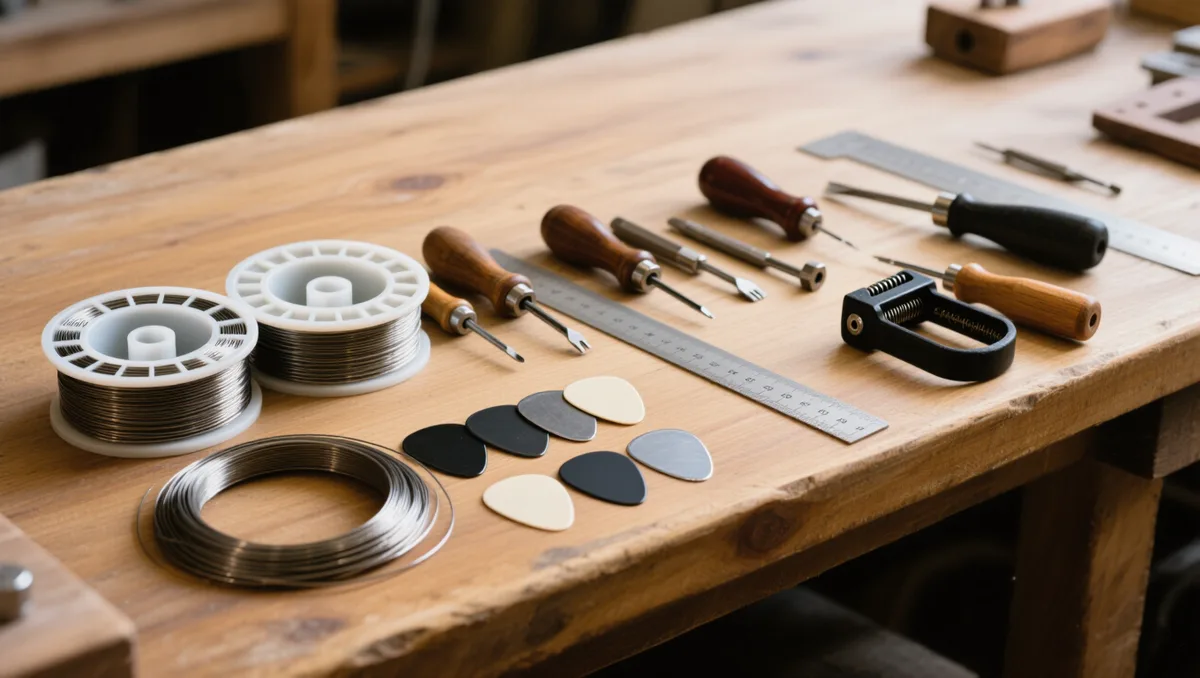
The bench economy around instruments is mostly repair, not making, and serious players pick builders by how they fix things. A setup — nut, frets, action, intonation — runs $75 to $250 at quality shops as of 2025; a refret costs several hundred; and acoustic structural repairs such as crack or brace work are quoted case by case. Trade reporting has described a persistent shortage of qualified repair techs as vintage instruments age and gigs wear gear out, which has pushed skilled repairers' lead times out for years. For a commissioning player, the practical test is simple: a builder who services and stands behind instruments decades after delivery is a safer bet than one who only ships new work, because a career instrument is a maintenance relationship, not a purchase.
How does a player commission one?
The process rewards patience and specificity. Builders recommend hearing or playing their instruments first — at shows, through dealer consignments or from clients — before committing a deposit, then submitting a detailed brief: tunings, scale, strings, playing injuries, amplifier and mic choices. Realistic expectations matter: a commission is a collaboration over years, design decisions are final once wood is cut, and delivery dates slip. Working players time commissions around record cycles for exactly that reason.
What is next for the craft?
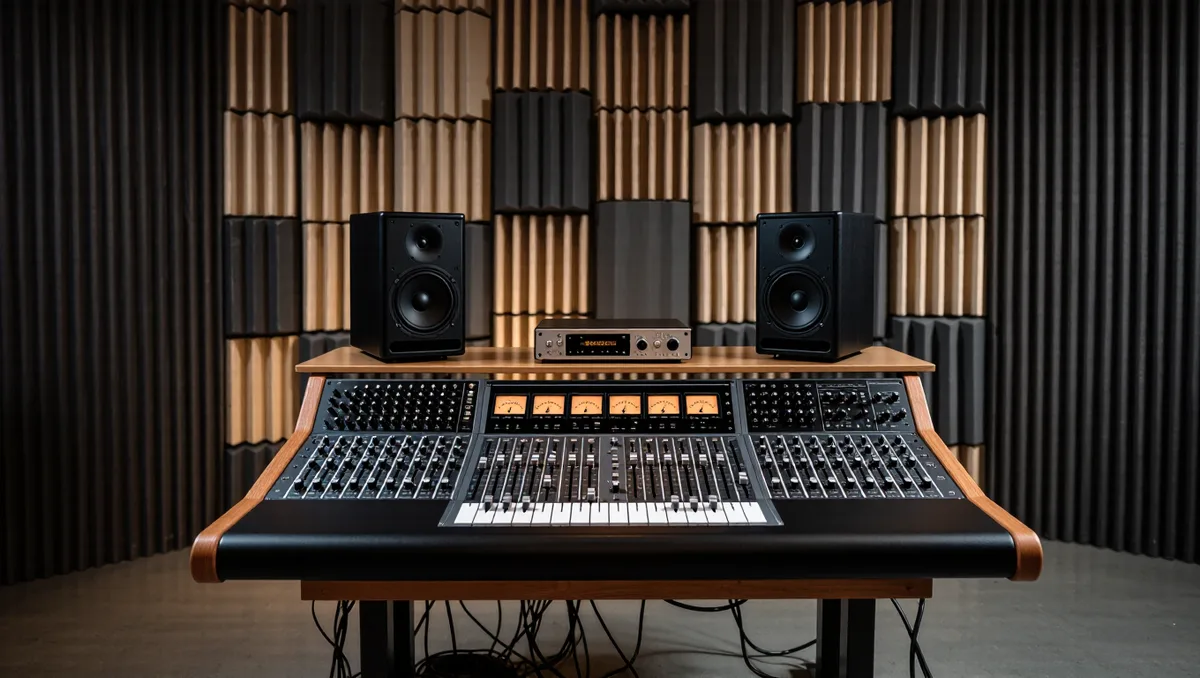
The pipeline is the live issue: an aging cohort of master builders, rising wood costs and a repair-side labor shortage documented across the industry. Watch for more builders offering short-run semi-custom models — fixed patterns with player options — to shorten wait lists without abandoning the craft, and for CNC-assisted roughing that leaves voicing and finish to handwork. The market signal is clear: as long as players record in rooms that reveal every response detail, someone will pay for an instrument voiced to their hands, and someone will spend years learning to build it.