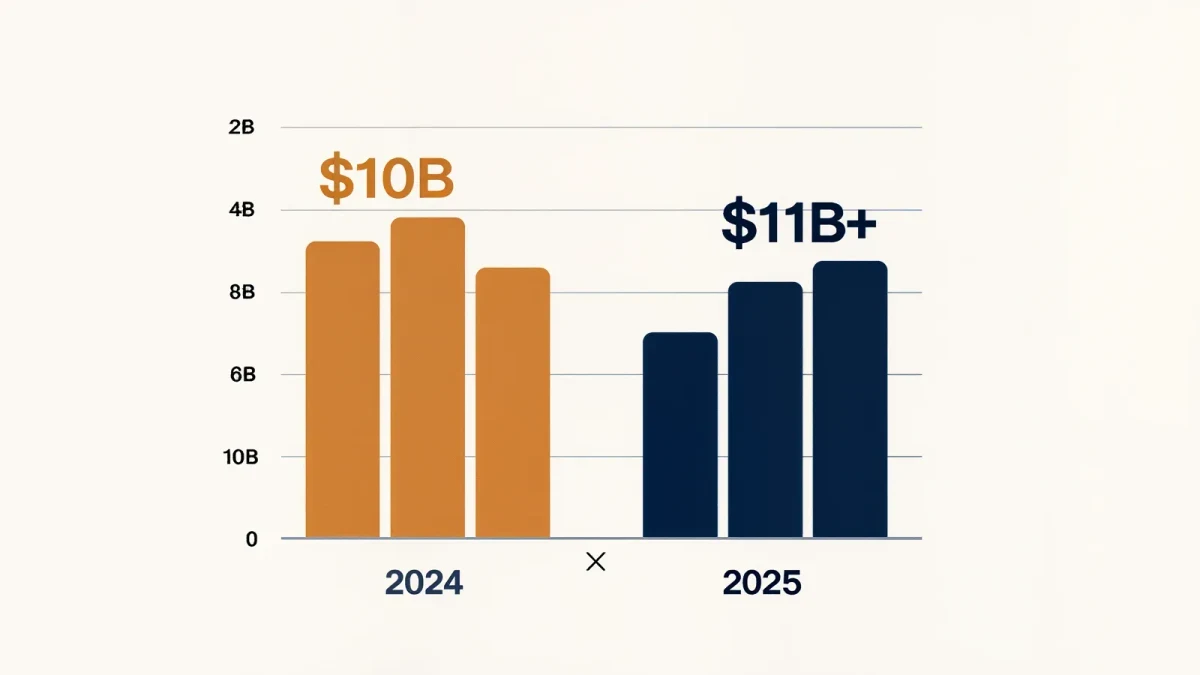
Spotify paid the music industry more than $11 billion in 2025, with payouts growing over 10% year over year while other industry income sources grew closer to 4%, per the company's January 28, 2026 newsroom post. Weeks earlier, on January 15, 2026, Spotify raised US subscription prices — Premium Duo moved from $16.99 to $18.99, with family plans up as well — effective February.
This piece explains what those numbers mean for how artists actually get paid.
How does the streaming royalty pool work?
Spotify allocates roughly 30% of stream revenue to itself and splits the remainder between recordings and publishing, with the recording side — labels and artists — taking around 56% per MIDIA Research estimates. Payouts are distributed pro-rata: your subscription fee goes into one pool, and that pool is divided according to each artist's share of total streams. A track needs at least 1,000 streams in the past 12 months to generate recorded royalties, a threshold Spotify introduced in early 2024, saying it would redirect about $1 billion toward working artists over five years.
Why is the payout model under pressure?
Through the first half of 2026, artist groups have kept pushing for a user-centric model, under which each subscriber's money follows only the artists that subscriber actually plays. Pro-rata math rewards the biggest catalogs; user-centric math rewards engagement per listener. Spotify's own framing — that its payouts grow several times faster than the rest of the industry's income — is aimed at a constituency that increasingly measures fairness by division of the pool, not just its size.
Do price increases help artists?
Directly, yes: a bigger subscription pool raises the pot that gets divided, all else equal, and Luminate counted 5.1 trillion global on-demand audio streams in 2025 — meaning per-stream rates depend on whether revenue grows faster than listening volume. Spotify's reported 10%-plus payout growth against roughly 4% industry income growth suggests the per-stream direction moved the right way in 2025.
What happens next
Watch three markers through the rest of 2026: whether Spotify formally pilots user-centric payout mechanics in any market, whether rival platforms try to differentiate on payout transparency, and whether publishers press the licensing leverage that catalog consolidation — including 2026's multibillion-dollar publishing deals — has handed them at the next renegotiation.