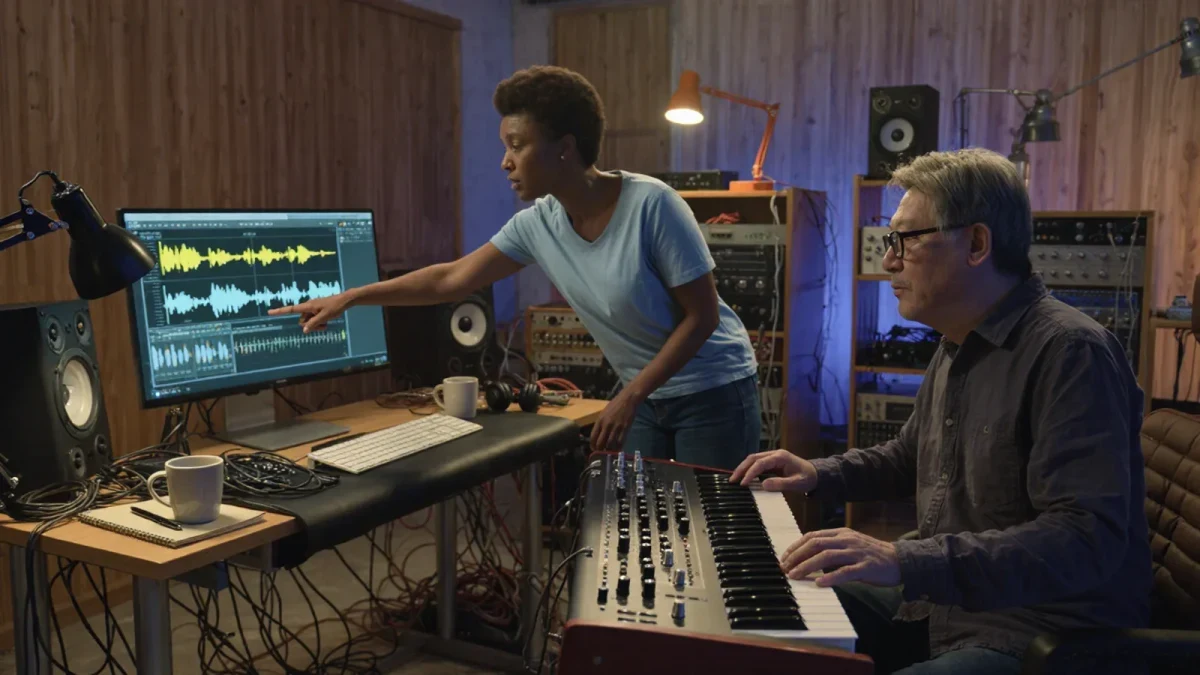
Splice acquired British sample-library developer Spitfire Audio for $50 million, per the companies' announcement, in a move positioned as a bid to lead what Splice sized as a $7 billion music software and services sector. The deal pairs Splice's mass-market subscription sample platform with Spitfire's premium orchestral instruments — the libraries behind countless film scores and pop productions.
This piece looks at what the consolidation means for the tools musicians actually use.
Why would a sample platform buy an orchestral library maker?
Because the two halves of the market are converging. Splice built its business on loop and sample subscriptions for producers; Spitfire built meticulously recorded orchestral and cinematic instruments used by composers and top-line producers alike. Owning both lets one company move a bedroom producer from a one-shot sample to a full arrangement without leaving its ecosystem — and gives Splice the recording infrastructure, player relationships and British studio pedigree that AI-assisted tools still need as source material.
How are AI tools changing producer workflows?
The 2026 stack looks like a spectrum. At the generation end, Suno's V5 and Suno Studio tools turn text descriptions into full produced songs and fit into professional workflows. In the middle, AI-assisted processing handles articulation smoothing, micro-timing correction from real human performances and sample-library blending — augmenting rather than replacing production craft. At the rights end, licensing is being formalized: publishers including Sony Music Publishing, Universal Music Publishing Group and Warner Chappell Music signed 2026 agreements with Musixmatch covering more than 15 million works for non-generative AI and analytical services, signaling that the licensing layer around production AI is arriving through deals, not lawsuits alone.
What does the deal mean for indie artists?
Subscription economics keep working in their favor: sounds that once required four-figure sample libraries now arrive inside monthly plans, and the acquisition likely accelerates that bundling. The trade-off is concentration — when one company owns distribution, instruments and the AI layer, pricing power shifts toward the platform. Independent library makers compete on specialization: hyperlocal sounds, niche instrumentation and artist-branded packs.
What happens next
Watch Splice's product roadmap through the rest of 2026 for Spitfire-branded integration into subscription tiers, and watch whether further consolidation follows — the sector's size estimate implies room for more deals among plugin makers, sample houses and AI generation startups before the year is out.