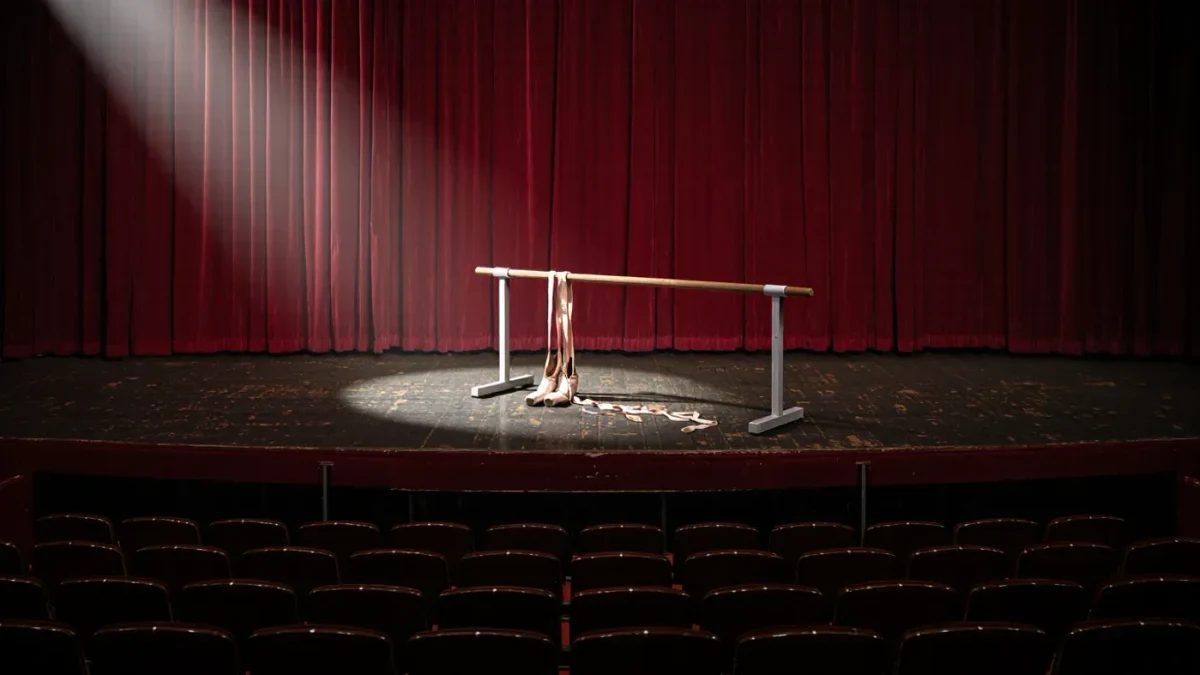
How long does a pair of pointe shoes last a professional dancer? Sometimes a single performance. The shoes that let a ballerina stand on the tips of her toes are not durable products but consumable equipment — a principal dancer at a major company can order and wear through well over a hundred pairs a year, and leading roles on big stages can kill a pair in one night. That consumption rests on a genuinely handmade craft: Freed of London, based in Hackney, produces roughly 350,000 pointe shoes a year, about 250,000 of them hand-made by a small bench of makers, per BBC reporting inside the factory in 2022 — each maker identified by a letter stamped on the sole.
This is craft reporting, not shopping guidance; prices and supply details are as of published reporting through 2025.
How is a pointe shoe actually built?
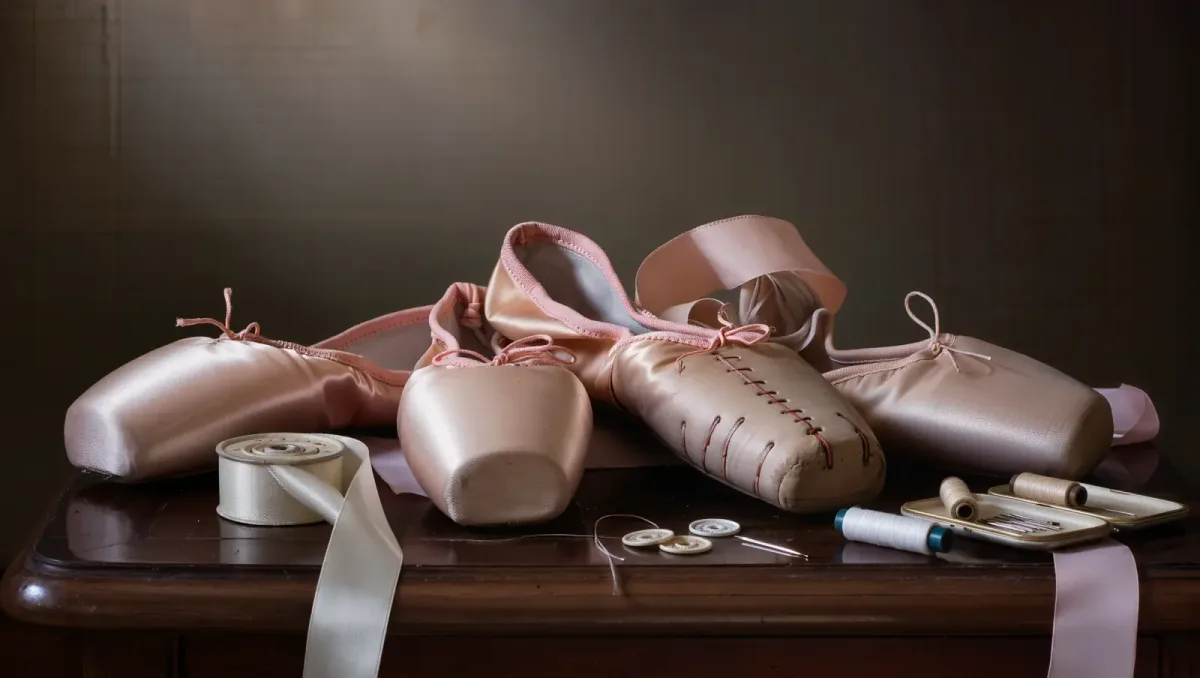
Traditional construction turns soft materials into a load-bearing structure. The box — the hardened toe case a dancer stands in — is built from layers of burlap, paper and hessian glued with paste, shaped over a last and hardened by drying rather than heat. The shank, a stiffened leather-and-paper board along the insole, provides the resistance a dancer articulates against when rising through demi-pointe onto full pointe. In hand-made shoes like Freed's, one maker builds the whole shoe: the paste is mixed in-house, the satin upper is lasted by hand, and no two makers' shoes are identical — which is why dancers order by maker letter as much as by model. A synthetic alternative exists: Gaynor Minden, introduced in the 1990s, uses elastomeric materials for a longer-lasting, more uniform shoe, and the two approaches divide dancers on feel and durability.
Why do professionals wear through shoes so fast?
Mechanics, mostly. A dancer's full body weight lands on a platform a few centimeters wide, repeatedly, through jumps and relevés; the paste-box structure softens as moisture and force break it down, and the platform fabric wears through under friction from turns. For principal dancers in heavy classical roles, the support that defines the shoe degrades within a handful of wears — company practice varies, but trade and company profiles have long described professionals cycling through pairs weekly and ordering custom specs: shank strength, box shape, platform size, vamp length, drawstring placement, dozens of measured variables. The shoe is also personalized on arrival: dancers darn the platform for grip, cut the shank, bend it, soften the box, and attach elastic and ribbons sewn by hand to their own tension.
What do the shoes cost, and who pays?
Retail prices for professional brands have run roughly $80 to $120 a pair in recent years, and custom pairs more. At professional consumption rates — hundreds of pairs a year for a principal — the arithmetic only works because companies subsidize shoes: major ballet companies budget pointe-shoe supply as a standard production cost, and documented company programs supply dancers with their allocation directly. For students and pre-professionals, the cost is real household spending, which is one reason fit matters so much: an ill-fitting box wastes money and, more seriously, loads the foot incorrectly. Professional fittings at specialist stores remain the standard advice because sizes are not comparable across brands, or even across a single brand's makers.
Why is the craft so concentrated?
Because the skills were never industrialized at scale. Freed's Hackney benches, Bloch's Australian production, Grishko in Moscow and a handful of others hold most of the professional market, and each maker's expertise — shaping a box by feel, judging paste consistency — is trained through years of apprenticeship. The BBC's factory reporting noted the age profile and succession concern among the small maker workforce, a pattern repeated across heritage crafts: demand from dancers worldwide rests on a few dozen people's hands. Labor conditions and pricing pressure add to the challenge, since a handmade product competes with cheaper machine-made shoes for the student market that subsidizes most brands' volume.
When should a student start pointe, and how are shoes chosen?
The professional consensus is readiness-based, not age-based: teachers and dance medicine practitioners generally wait for sufficient ankle and foot strength, alignment control and growth maturity rather than a birthday, commonly assessing a student over months before first pointe work. The first fitting matters disproportionately. Specialist fitters measure foot length, width, taper, arch height and ankle mobility, then assess the shoe on the foot — box shape against the toes, shank resistance against the arch, platform contact when en pointe. Because construction varies maker to maker even within a brand, dancers often trial several models, and growing feet require refits within a year. The uncomfortable economics of that stage — new shoes every few months at student prices — is where most families meet the true cost of the craft before any company ever pays for a pair.
What is next for pointe shoes?
Two live threads as of 2026: materials and access. Synthetic and hybrid constructions keep improving, marketed on durability and consistency, and some companies now issue dancers mixed supplies. Meanwhile the handmade economy endures because professionals keep ordering by maker letter — the craft's verdict is delivered nightly on stage. Watch also for the sustainability question entering the conversation: hundreds of discarded pairs per dancer per career is a waste profile ballet companies and schools have only recently begun to address publicly through recycling pilots and company take-back programs. Company take-back pilots, satin recycling schemes and second-life programs for lightly worn student shoes have appeared across the industry, though scale remains small relative to consumption.